

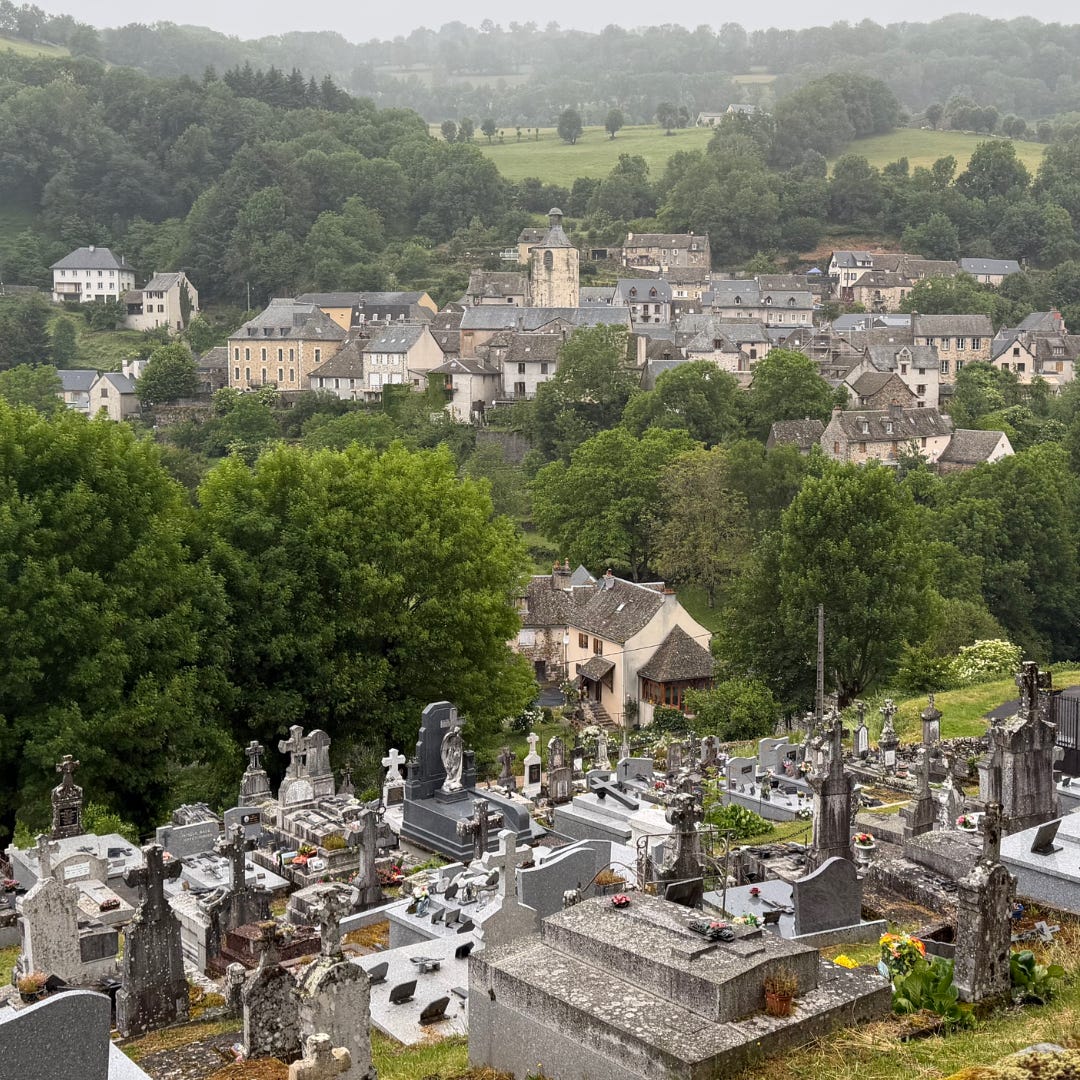
Is there someone, or somewhere, you wish you could return to for a little while?
Perhaps you still think of things you would tell someone who has died. You hear a phrase they used, wonder what they would make of something, or pass a place you once visited together. Perhaps you miss the dog who made every walk a shared adventure, the tree you climbed as a child, or the meadow that has since been paved over.
These moments arrive in the middle of ordinary days. You notice, remember, and carry on, even when you wish you could stay with the memory a little longer.
This week, you might take that memory for a walk.
This Saturday is Halloween, and the days that follow are All Saints and All Souls. If you feel the pull of these days but have never had a simple way to mark them, a remembrance walk offers one: a short route, 1 name or memory, and a little time, in any tradition or none.
A Season That Makes Room for Memory
In the Northern Hemisphere, the dark arrives earlier, the leaves fall, and the year turns toward winter.
In Gaelic tradition, Samhain marked the beginning of winter, with celebrations on the evening before November 1, and Irish folk customs included welcoming the dead home. Western Christian traditions observe All Saints’ Day on November 1 and All Souls’ Day on November 2. In Mexico and many communities with Mexican roots, Día de los Muertos welcomes deceased loved ones with flowers, food, and offerings.
The traditions differ, and each gives remembrance a place in the calendar.
As an ordained Wild Guide and an NYU chaplain who has walked the Camino pilgrimage path 7 times, I find walking the simplest way I know to make room for those who have gone before us, including the more-than-human relationships and places whose absence I feel. You can bring your faith, your questions, or no particular belief.
3 Steps for a Remembrance Walk
A remembrance walk takes 3 simple steps, and you can take them in fields, along a hiking path, on a Camino, through a cemetery, or around your own block.
1. Choose a Name or Memory to Carry
Who or what have you been missing lately?
It might be a parent or grandparent, a friend, or someone whose absence still catches you by surprise. It might be a teacher or writer you never met, whose words helped you find your way, or an animal whose companionship changed the shape of your days.
You can understand “ancestor” generously here: ancestors of blood and bone, ancestors of ideas and influence, and the more-than-human beings and places that helped shape your life. A beloved animal, a childhood tree, a familiar stretch of woodland, or a meadow you can no longer visit can be part of this walk too. You might carry a name, an image, or simply your memory of being there.
If your family history is painful or unknown, you might begin with someone whose kindness helped you feel at home in the world, or a place where you felt you belonged.
This year, I will walk for family members and for my dogs who have died. I will also remember Mary Oliver, Walt Whitman, Jean-François Lyotard, and Jacques Derrida, ancestors of ideas whose words continue to shape my thinking. Near the end of Song of Myself, Whitman writes:
If you want me again look for me under your boot-soles.
You do not need to remember everyone or everything at once. Start with 1 name or memory, and let others join along the way.
2. Choose Where to Walk
You might choose a cemetery, a churchyard, or somewhere you once walked together. You might visit a tree or landscape that brings a lost place to mind.
An ordinary route can hold this practice too: the park you visit each week, the streets around your home, a path you know by heart. You can remember somewhere you love from wherever you are now. Allow 20 to 30 minutes if you have them, and a few minutes around the block if you do not.
On the Camino, I also remember the pilgrims who walked these paths and kept them alive for a thousand years. Wherever you walk, you may find yourself thinking of those who made your own path possible.
3. Walk, Pause, and Remember
As you begin, bring your chosen person, animal, tree, or place to mind.
Let memories come at their own pace: a voice, a familiar gesture, something that still makes you laugh. You might remember the texture of bark beneath your hands, the smell of a meadow, or the sound of paws beside you. If nothing comes, keep walking, since you are still giving this time your attention.
When you reach a tree, a bench, or a turning in the path, pause. Say the name aloud or silently, and if there is no name, hold the memory for a moment.
You might offer thanks, if that feels true. You might speak a few words about what you miss, what has changed, or what you wish you could share, or you can simply stand quietly.
Then turn toward home and notice what meets you: the ground beneath your feet, a bird calling, the temperature of the air. If you tried the Earth-Based Examen I shared earlier this month, this movement may feel familiar, looking back and then attending to what is here.
You Can Begin as You Are
It is easy to wait until you can visit a distant grave, return to a meaningful place, or find more time.
A remembrance walk can fit into your life this week. Grief, gratitude, laughter, numbness, and unfinished feelings all belong on it. The walk may bring a vivid memory, or it may feel like an ordinary walk with a relationship held quietly in mind.
If walking isn't possible, spend a few minutes outdoors or sit by a window with your chosen name or memory.
The Practice: A Remembrance Walk
The whole walk fits into a short practice you can do on any of these 3 days, or whenever you can.
A Remembrance Walk
How long. 20 to 30 minutes if you have them, and a few minutes if you do not.
Where. A cemetery, churchyard, field, hiking path, Camino, the streets around your home, or a seat by a window.
What to attend to.
Choose 1 name or memory: a person, an animal, a tree, or a place you miss.
Walk outward and let memories come at their own pace.
Pause at a tree, a bench, or a turning, and say the name aloud or silently, or hold an image in mind.
Offer thanks or a few words, if you wish, and know that quiet is welcome too.
Walk home noticing what meets you.
What you may notice. A memory you have not thought of in years may return. You may feel grief, gratitude, or both, and the walk home may feel different from the walk out.
In the Southern Hemisphere, these days fall in spring, near Beltane, and new growth can hold remembrance too.
A short walk can hold the people, animals, trees, and places you miss. Sometime between Saturday evening, October 31, and Monday, November 2, or whenever you are able, give 1 of those relationships a little time.
Who or what came to mind as you read this, and where might you walk in remembrance?
The second cohort of the Rewilding the Soul EcoSpirituality Certificate at Cherry Hill Seminary, where I teach, begins in March 2027, and applications are now open. It offers a year with a small group focused on spiritual practice grounded in direct, reciprocal relationship with a specific place and its more-than-human inhabitants.
Contemplative Walking is a reader-supported publication. To receive new posts and support my work, consider becoming a free or paid subscriber.