

One of the students I recently spoke with in my capacity as a university chaplain looked exhausted during our conversation this week.
Not from overwork, but from fighting December. She’s been trying to maintain her summer energy, her fall productivity, her capacity to hold climate grief with the same intensity she managed in September.
“I don’t understand,” she says. “Why does everything feel harder right now?”
I ask her to look out the window.
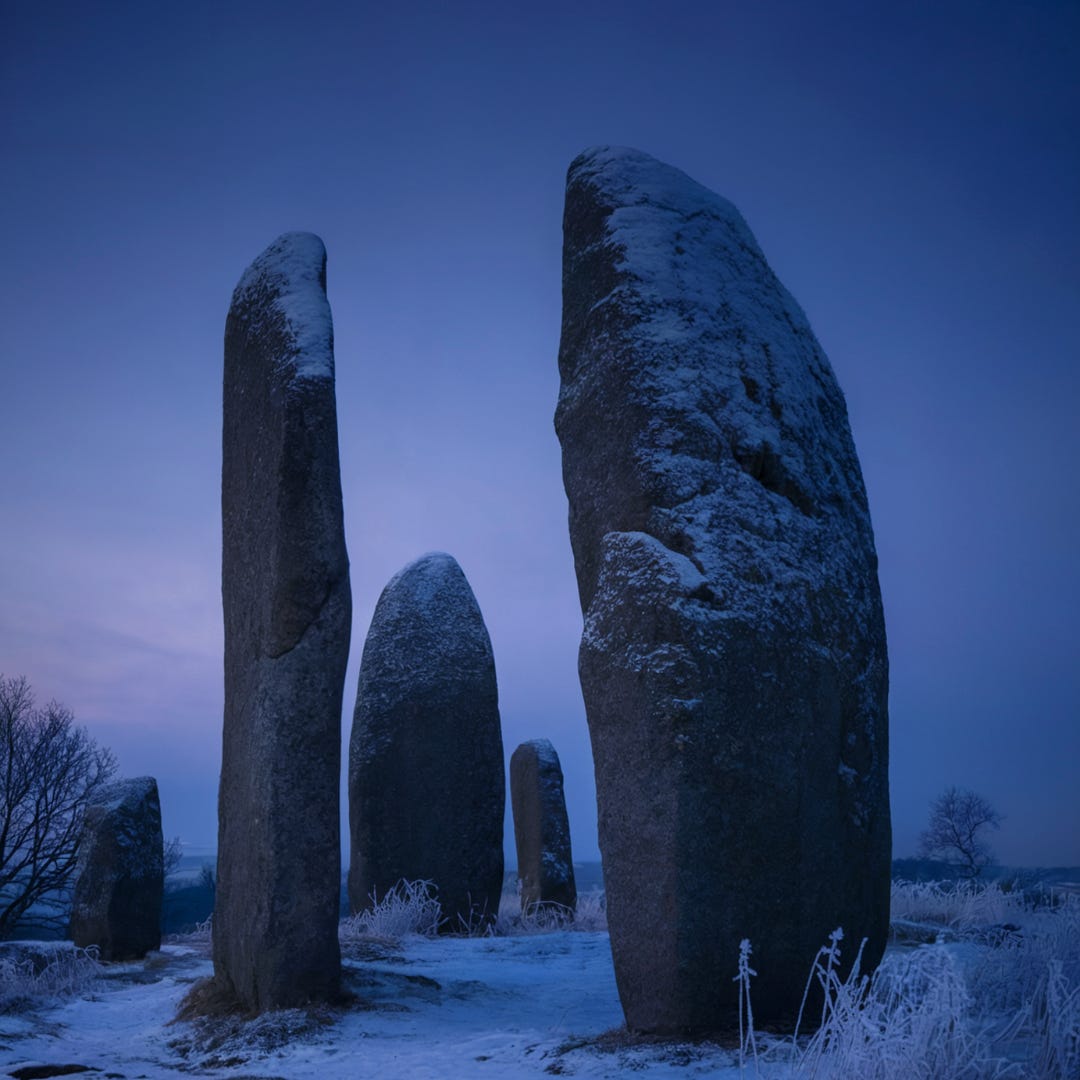
It’s 4:30 pm. Already dark. The trees are bare. The earth is resting. Everything outside is slowing down, turning inward, honoring the season’s invitation to do less.
Everything except us.
After years of sitting with people through winter’s darkness, I’ve watched the same pattern repeat. December offers a gift most of us refuse. Earth herself is modeling exactly what we need to learn about holding ecological awareness.
Let me show you what the longest nights are teaching.
What Earth Models in December
December doesn’t apologize for its darkness.
The days shorten without explanation or justification. The light withdraws. The cold arrives. Trees stand bare without pretending they’re still in leaf. Earth doesn’t rush toward spring or manufacture false cheer about winter.
She just is. Dark. Slow. Inward. Resting.
This is a teaching moment: holding difficulty without bypassing it. Honoring what’s hard without pretending it’s something else. Slowing down without giving up entirely.
Earth doesn’t treat December as a problem to solve.
She treats it as a necessary season. A time when different work happens. When seeds rest in darkness. When roots deepen underground. When the visible world pauses, so invisible transformation can occur.
Your climate grief works the same way.
Why We Fight December
Our culture teaches us to resist this seasonal wisdom.
December arrives, and we’re supposed to be cheerful, productive, consuming, and celebrating. The darker it gets outside, the brighter we light everything inside. The more Earth slows, the faster we’re expected to move.
Black Friday. Cyber Monday. Holiday shopping. Year-end goals. Mandatory cheer.
We treat December like an obstacle to power through rather than a teacher to learn from. We add more light when the Earth invites us to sit with darkness. We speed up when the season is modeling slowness.
Then we wonder why we feel so exhausted.
When you fight the season, your climate grief has nowhere to rest. The cultural demand for productivity and positivity leaves no space for the natural rhythms of holding ecological loss. You’re carrying awareness that needs darkness, slowness, and turning inward.
December is offering that. We’re just, somewhat ironically, refusing the gift.
The Winter Solstice Teaching
December 21st approaches. The longest night of the year.
The Winter Solstice isn’t about celebrating light’s return. Not yet. First, it honors the darkness that’s been deepening since June. It marks the moment when night reaches its fullest expression.
Only then does light begin growing again.
This is crucial. The turning happens in the darkness, not after we’ve escaped it. The shift toward light emerges from fully inhabiting the dark. There’s no bypassing. No shortcuts. No way around.
Indigenous cultures understood this. Winter solstice ceremonies honor the darkness first. They sit with the longest night. They let it teach what it came to teach.
Then the light returns. Not because we forced it. Because we made space for the full cycle.
Your climate grief needs this rhythm too.
Aligning Grief Work With Winter
What if December is actually the ideal month for climate awareness work?
Not despite the darkness, but because of it. The longest nights create conditions that summer can’t offer. Permission to slow down. Ancestral acceptance of turning inward. Natural rhythms that align with the interior work of holding space for ecological loss.
Summer demands action, visibility, and outward engagement.
Winter invites reflection, depth, and underground transformation. Both seasonal extremes matter, and they both serve. But climate grief that never gets winter becomes frantic, unsustainable, and eventually collapses.
December is offering you permission to work differently.
To let your climate awareness rest in darkness for a while. To stop performing productivity with your grief. To turn inward when that’s what the work requires. To trust that invisible transformation is still transformation.
This isn’t giving up. This is aligning with Earth’s actual rhythms rather than fighting them.
Think of it like the trees outside your window. They haven’t quit. They’re doing the essential work that only happens in dormancy. Root deepening. Energy conserving. Preparation for future growth that can’t occur without this rest.
Your capacity to hold climate truth needs the same winter cycles.
Winter Practices for Climate Awareness
So what does it actually look like to receive December’s gift?
Stop trying to maintain summer’s intensity. Your climate awareness doesn’t need the same energy in December that it needed in July. Let it rest. Let it go quiet. Let it turn inward without judging that as retreat.
Honor the darkness without adding artificial light. Sit with what’s difficult without immediately trying to fix or transcend it. December teaches that some things need to be felt in darkness before they can transform.
Walk in actual darkness. Early mornings before dawn. Evenings after sunset. Let your body experience what Earth is modeling. The world doesn’t end when light withdraws. Different gifts emerge, all with their unique opportunities.
Create threshold rituals for the Winter Solstice. Mark December 21st as a turning point. Acknowledge what you’ve been holding through the darkening months. Let the longest night teach you its particular wisdom about carrying ecological grief.
Rest more than feels productive. December measures success differently than June. The work happening in rest, in darkness, in slowness is real work even when nothing visible is produced, or even noticed.
Trust the underground transformation. Seeds in winter darkness aren’t doing nothing. They’re doing exactly what prepares them for spring growth. Your capacity to hold climate awareness is deepening even when you can’t see evidence of progress.
The Gifts That Only Emerge in Darkness
Here’s what December offers that summer can’t:
Permission to stop performing. The darkness hides you. The cold keeps you inside. Cultural expectations shift slightly. You get brief permission to rest, to turn inward, to do less.
Use it. Your climate grief needs seasons when it’s not on display, not being productive, not proving its worth through action.
Depth that requires darkness. Some truths only reveal themselves when you stop rushing. Some grief only metabolizes in slowness. Some transformation only happens underground.
December creates those conditions.
The both/and rhythm that Earth models. Dormancy with aliveness. Rest with preparation. Darkness with the promise of eventual light. This is the exact level of climate awareness that is required.
Not either action or grief. Both. Not either engagement or rest. Both. December teaches the rhythm.
Community in darkness. When you stop pretending December should feel like summer, you find others who are also learning to work with the season. The people doing climate grief work in winter’s rhythms become visible to each other.
You’re not alone in the longest nights.
The gift of limits. December says: you can’t do everything. You can’t maintain summer’s pace. You can’t bypass the darkness. These limits aren’t failures. They’re Earth teaching you how to work sustainably with what’s actually true.
Climate awareness needs those limits too.
What Becomes Possible
When you stop fighting December and start receiving its teaching, something shifts.
Your climate grief finds a rhythm that’s actually sustainable. Not the frantic doing that leads to burnout. Not the numbing that leads to disconnection. A third way that honors both the difficulty and your need for rest.
You learn what Earth has been modeling all along.
How to hold what’s hard without pretending it’s something else. How to honor darkness without treating it as an enemy. How to slow down without giving up. How to let grief and rest walk together.
This is the work of our time. Not just climate action. Not just grief processing. The integration of both through seasonal rhythms that Earth is teaching us to remember.
December’s darkness isn’t something to endure.
It’s a gift we’ve forgotten how to receive. The longest nights are offering exactly what climate-aware people need most: permission to stop fighting, space to turn inward, trust that transformation happens in darkness.
Nine days until the Winter Solstice. The longest night is approaching. Earth reaches her darkest expression before light begins to return.
What if you met that night as a teacher rather than an obstacle?
What is December’s darkness teaching you this year? What are you noticing in the longest nights? Share below. I’m curious what gifts you’re discovering in this season.
If this helped you receive December differently, please share it with someone else learning to work with winter’s rhythms.
If you want more practices for aligning climate awareness with Earth’s seasonal teachings, subscribe below. I publish at least every Monday, Wednesday, and Friday morning.
December’s darkness is a gift.
You just have to stop fighting long enough to receive it.
~ Jeffrey