

Please Like or Comment on this post
to show others that you valued my words.
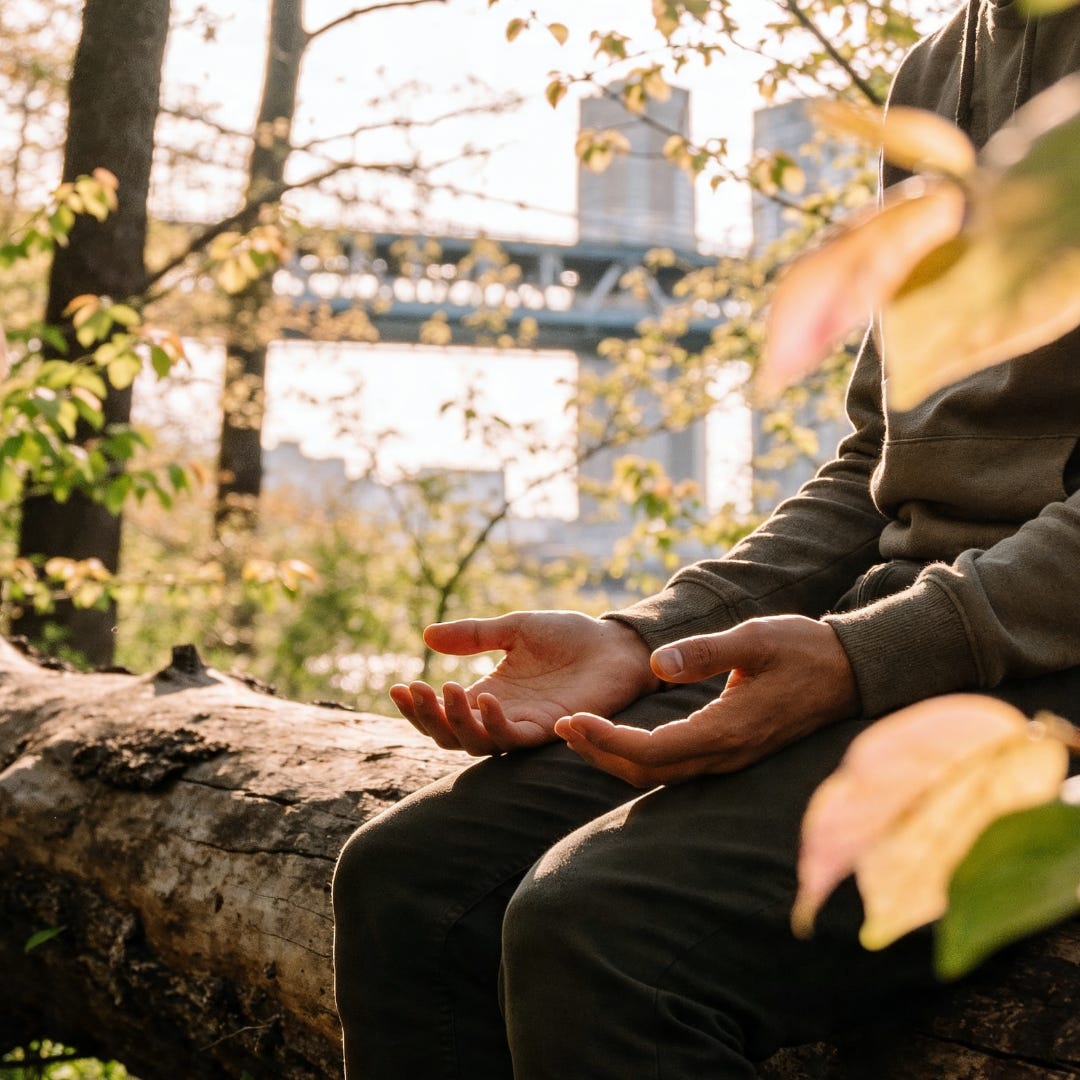
Every year it arrives. Every year it leaves.
Earth Day comes on April 22 with genuine intention. People share posts, attend events, sign petitions, plant something, and feel something real. For a brief moment, the culture agrees that the Earth matters and that this agreement is worth marking.
Then the day passes, the news cycle shifts, and the living world returns to the background of our lives.
You already know this. That is what makes it quietly exhausting and what brings you here in the first place.
Why One Day of Care Is Not Holding You
This is not a criticism of Earth Day. It is an honest look at what one day can and cannot do.
If you are reading this, you likely already care. You follow the science, understand what is happening, and feel its weight. Most days, that awareness does not translate into anything that feels steady or sustaining.
Instead, it moves in a familiar cycle: a moment of attention, a surge of concern, and then a return to a kind of low-level background anxiety that changes nothing and costs something.
The issue is not your level of care, but rather the structure you have to hold it.
Awareness Is Not the Same as Relationship
Earth Day is built on awareness, but awareness alone cannot hold what you are feeling.
Awareness is general. Relationship is specific. Awareness says the Earth is in crisis. Relationship says this particular place matters to me, and I know why, because I have been coming back to it across seasons, and something has passed between us.
When care remains at the level of awareness, it has nowhere to land. It turns into overwhelm, helplessness, or a form of grief that never fully moves. This is not a personal failure.
It is what happens when awareness exists without a practice to support it.
What Most Ecologically Aware People Are Actually Missing
The people I work with as a contemplative walking guide and university chaplain are not indifferent to the natural world.
If anything, they are too aware. They carry ecological concern alongside everything else this moment asks them to hold. What they almost always lack is not more information but a way to be in actual contact with what they care about.
Not a practice of doing more or staying more informed. A practice of contact: regular, specific, returned to contact with one place, one tree, one stretch of land or water.
Not scenery. Not a concept held at a comfortable distance. Something encountered over time.
Awareness of the whole can overwhelm. Relationship with the particular can sustain.
What to Do With Earth Day Instead of Observing It
A single day cannot create that kind of relationship. At best, it can point toward one.
As it is usually practiced, Earth Day functions as a destination. You arrive, participate, and leave. It works differently when you treat it as a threshold, a beginning rather than an end.
Go outside and choose one place you can return to. It does not need to be dramatic or distant. The tree outside your door, a corner of a familiar park, a stretch of ground you pass regularly. Any one of these is enough.
Spend ten minutes there. Stay long enough for your attention to settle and for something subtle to begin to register. Then come back next week, and the week after that.

Notice what happens when something becomes familiar. Notice when you begin to recognize rather than simply observe.
Attention slowly becomes relationship.
A Different Way to Hold What You Already Feel
The question is not whether you care about the Earth. You do.
The question is whether you have a way to stay in relationship with what you care about, something that holds across the weeks between annual observances, something the living world can actually receive.
One day of attention cannot hold what you already feel. One place, returned to over time, can begin to.
Begin today. Go outside. Choose one presence. Stay longer than feels necessary.
Come back next week and notice what the second visit reveals that the first one could not.
The Earth does not need your attention once a year. It needs your return.
This practice is the foundation of the Rewilding the Soul EcoSpirituality Certificate at Cherry Hill Seminary where I teach, and is also woven into every day of the September 2026 Contemplative Walking Retreat on the Le Puy Camino I am leading along seven days of returning to the same living landscape until it becomes something more than scenery. No retreat required to begin. Start outside today.
Please share what you notice when you go outside today. Don’t worry about doing too little, as the only way to do that is to do nothing at all.