

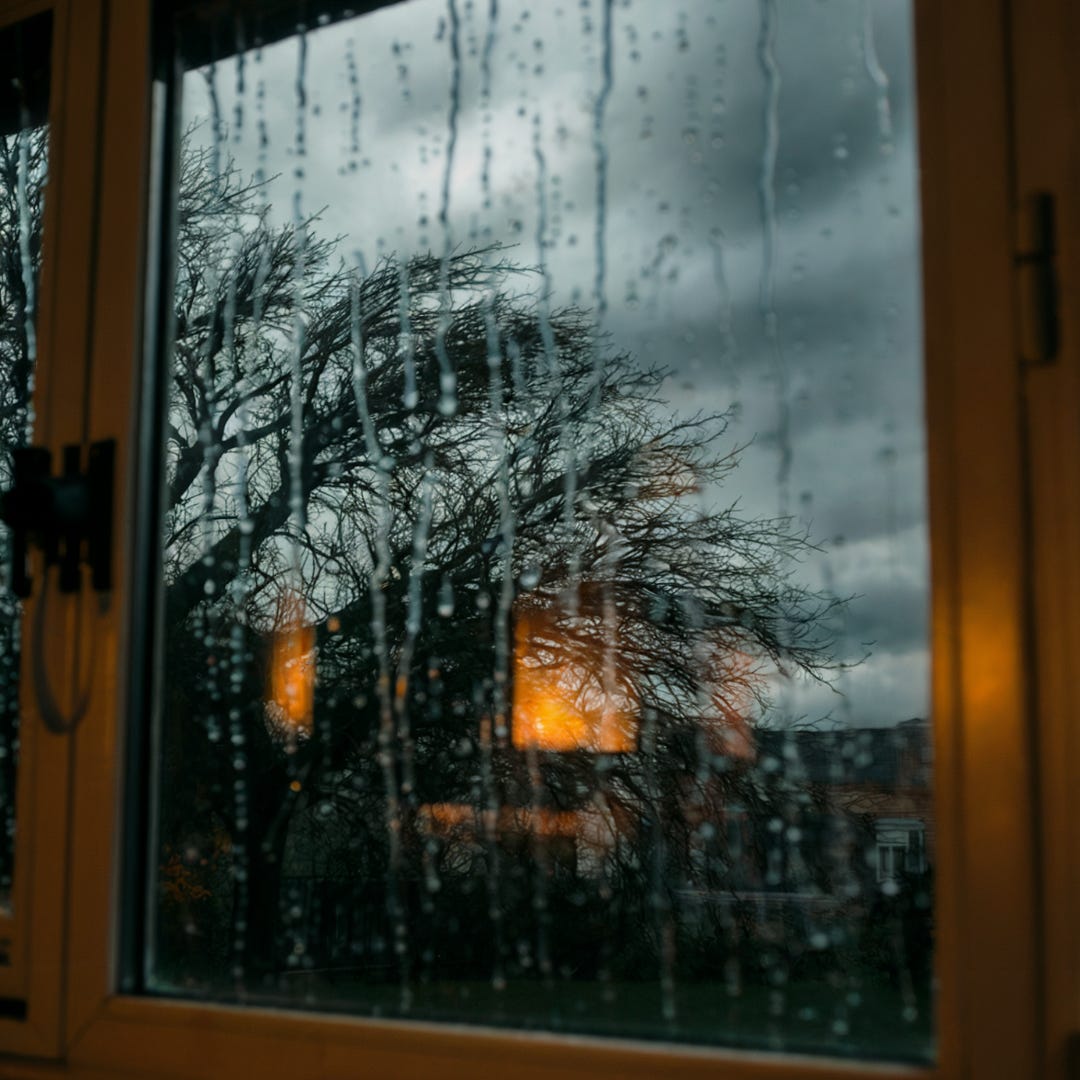
I’m writing this in the middle of a storm.
Outside, rain pounds against the windows. Heavy winds shake the trees. We had a power outage earlier today. It’s very dark for daytime, the kind of darkness that makes afternoon feel like evening, that makes you lose track of time.
This is the backdrop for Samhain Eve. The threshold day. The day before the Celtic New Year, before the dark half officially begins.
And I’m sitting here building my ancestor altar, adding items as I write, preparing for tomorrow’s crossing. This Samhain feels different than other October 30ths. Not because anything external has changed, but because I’m paying attention. Because I’m writing about my experiences. Because I’m making myself present to this threshold instead of just passing through it.
Yesterday, I shared my truth with you, that darkness has never felt right to me. Today, on Samhain Eve, I want to tell you what I’m actually doing about it.
What Honoring the Dark Half Actually Means
I am learning that honoring something doesn’t mean loving it.
Honoring the dark half doesn’t require me to embrace darkness, celebrate it, find it beautiful, or pretend it feels welcoming. Honoring means something simpler and more honest to me: acknowledging it exists, recognizing it’s real, and admitting it matters.
It means not pretending the darkness away. Not forcing through with summer energy. Not acting like seasonal rhythms don’t apply to me because I live in a modern world with electric lights and central heating.
Honoring the dark half means recognizing I am part of this rhythm, whether I like it or not. I can either fight against it and exhaust myself, or I can adapt my life to align with it.
It’s like respecting an elder you don’t particularly like. You honor their role, their place in the culture, and even their influence on your life, even if you don’t love spending time with them. You acknowledge the reality of the relationship without pretending it’s something it’s not.
That’s what I’m doing with the dark half. Changing my practices to work with the season, not against it. That’s the practice I feel called to do at this time.
What I’m Actually Changing
So what does adaptation look like in practice? This is what I am doing this season, starting now:
Morning walks beginning Saturday, November 1st. No more evening walks until spring. I’ll walk in morning light instead of dusk’s unease. This is a concrete shift, a recognition that my walking practice needs to honor my honest discomfort with darkness, not override it.
Timers and small nightlights are on all night. I’ve set these up throughout my home. If I or the dogs need to get up in the middle of the night, we can see a little bit. This is very comforting. It’s a small thing, but it matters, especially in rural New York, where there are no streetlights, no ambient light from neighbors, just absolute darkness both inside and outside.
Trying to stop work when it gets dark. As a consultant and chaplain, I work all hours. Meetings happen when they happen. But I’m intentionally trying to limit work once darkness falls, at least where possible. At this time of year, it’s common for people to both leave and arrive home in the dark, and to start and finish work in the dark. I can’t always control this. But where I can, I’m choosing daylight hours. I’m aligning my work with available light.
These aren’t dramatic changes. They’re small adaptations. But they’re honest responses to the reality that darkness doesn’t feel right to me, and I’m entering a season where darkness dominates.
What I Appreciate (Even Without Loving the Darkness)
Here’s what surprises me: there are things about the dark half I actually appreciate, even though I don’t love the darkness itself.
Permission for rest. Society expects less output in winter. There’s cultural permission to slow down, stay inside, and hibernate. I can honor my body’s need for more sleep without guilt.
Inward time. The dark half is when I do deep focus work. I’m finishing my Forest Bathing and Forest Therapy studies. I’m developing a curriculum for the Rewilding the Soul EcoSpirituality Certificate. I’m preparing for the September 2026 Contemplative Walking Retreat along the first section of the Camino de Santiago de Compostela, starting in Le Puy, France (which is finally available for people to join!).
This retreat connects directly to what Samhain teaches: contemplating our connection to the natural world is directly connected to thinking about the cycle of life. Death and rebirth. Endings and beginnings. The threshold between what was and what will be. What better time is there to honor our ancestors?
Reading. Reflection. Writing. These feel more natural in the dark half. Less pressure to be “out there.” More space for sustained attention on projects that matter.
The preparation for spring happens in winter’s darkness. Seeds germinate underground, invisible. Trees rest so they can bud again. The dark half isn’t absence—it’s gestation, preparing for a celebratory return.
I don’t have to love the darkness to appreciate what it makes possible.
Tomorrow: The Threshold Crosses
Tomorrow is Samhain. The Celtic New Year. The day the dark half officially begins.
I’ll spend time at my ancestor altar. I’ll journal. I’ll reflect on the turn of seasons and on memento mori—the practice of remembering we will die. Not morbidly, but honestly. As a way of recognizing we’re part of the cycle.
I’ll think about my Contemplative Walking retreat and what it means that this offering is finally available. That after years of walking, studying, training, preparing, I am finally ready to hold space for others on the Le Puy route. To guide people through contemplative connection with the natural world and the cycle of life, to step away for a week in nature and a silence that is not often possible in our daily lives.
I’ll sit with the reality that I don’t have death figured out. I don’t have ancestors figured out. I don’t have any of this fully understood, and that’s okay.
Memento mori, remember that you will die. We all will.
Permission to Not Know
I want you to know, on this Samhain Eve, that you don’t need to have death or ancestors figured out. Nobody does.
You don’t need to understand the cycle of life or feel comfortable with endings or have clarity about what comes after. You can honor the threshold without having answers. You can mark this transition without certainty.
We all have ancestors we think about. We all experience seasonal shifts. We all face the reality that light decreases and darkness increases from November through April. This is universal—not religious, nor spiritual—just part of being human.
In fact, all living beings experience this in their own ways.
You can adapt to this season in your own way. Morning walks or afternoon walks. More lights or different lights. Stopping work earlier or starting later. Reading more. Resting more. Letting yourself be part of the natural rhythm instead of fighting it.
That’s what entering the dark half actually looks like.
Recognizing You’re Part of This
I’m part of the natural world. The darkness affects me whether I acknowledge it or not. The shorter days change my energy whether I notice or not. The storm outside right now—the one making this Samhain Eve feel so liminal and threshold-y—is the same weather system the trees and animals are experiencing.
When modern humans disconnect from seasonal rhythms, we miss this recognition. We miss the humility of knowing we’re not separate. We miss the wisdom that comes from aligning our lives with forces larger than ourselves.
I’m not romanticizing this. I’m not pretending I love it. But I’m acknowledging it, and in that acknowledgment, I find something like peace.
That’s what honoring looks like when you don’t love what you’re honoring. It looks like showing up anyway. Adapting anyway. Recognizing you’re part of this anyway.
The storm is still raging outside. My altar is still being built. Tomorrow I’ll sit with it in reflection.
How are you adapting as you enter the dark half? What’s one small change you’re making?
Reply and let me know. I’m crossing this threshold alongside you.
Walking into the dark half (with nightlights on),
Jeffrey
P.S. Tomorrow I’ll share reflections from Samhain itself—the actual crossing, the practices, what it feels like to mark the threshold. If you’re interested in learning more about contemplative walking as spiritual practice, or about joining the Le Puy Camino contemplative walking retreat in September 2026, subscribe to receive my weekly reflections.
Two thoughts: without the dark we wouldn't appreciate the light as much, and we would not see the stars.
I enjoyed this. And look forward to tomorrow’s article. I’m planning a 2026 Camino as well, though am not doing the writing workshop. I’ve read other authors who have attended it and it sounds wonderful!