

If you find this post helpful,
please like it + leave a comment
about what it shifted in you.
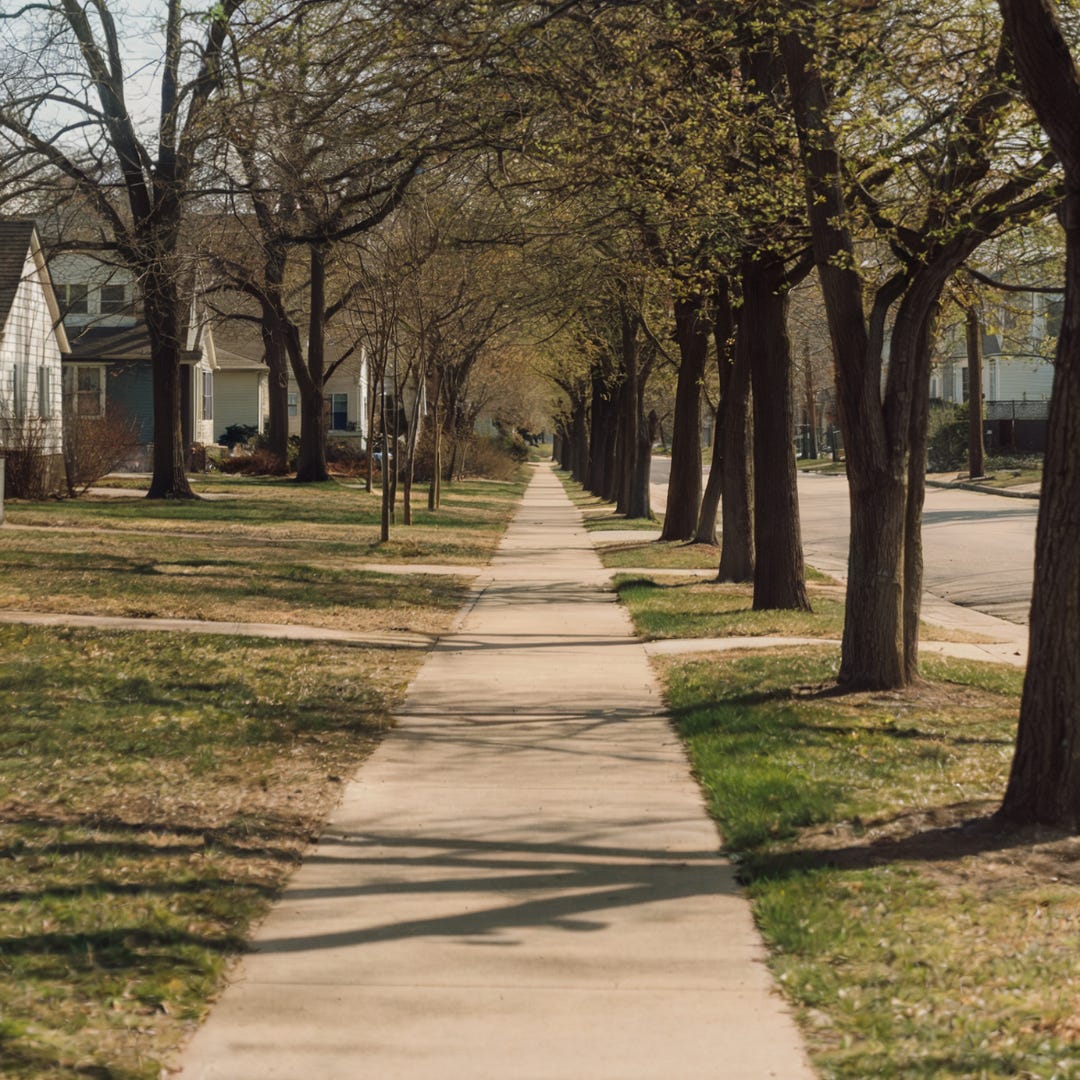
You do not need an hour.
This is the first thing I tell people who want to begin contemplative walking but feel they cannot fit it into their lives. They imagine long pilgrimages, silent retreats, mornings blocked off for practice. They see my 5 Camino walks and assume this is what contemplative walking requires.
It does not.
15 minutes is enough to shift something. 15 minutes is enough to step out of the mental noise and into presence. 15 minutes, practiced regularly, will change how you move through the world more than occasional hour-long walks squeezed in when life permits.
The obstacle is rarely time.
The obstacle is overthinking.
Stop Overthinking the Terms
People get tangled in vocabulary.
Contemplation. Meditation. Mindfulness. Presence. They have heard these words used in different contexts, by different teachers, with different definitions. They worry about getting it wrong. They wonder if contemplative walking is the same as walking meditation, and if walking meditation is different from mindful walking, and whether any of it counts if they are not doing it exactly right.
Here is what I tell them:
Stop.
The terms do not matter. What matters is this: Are you present to what is actually happening, or are you somewhere else while your body moves through space?
That is the only question.
Contemplative walking is simply walking with presence. Noticing what is here rather than rehearsing what is not. Connecting with the world around you rather than only the thoughts inside your head. Being in your body, on this path, in this moment.
You already know how to do this.
You have had moments of presence without trying. Walking somewhere beautiful and suddenly noticing you were actually there. Stepping outside on a crisp morning and feeling the air before your mind started planning the day. Moving through a landscape and feeling, for a few seconds, completely awake.
Contemplative walking is just that, on purpose.
Not achieving a special state. Not transcending ordinary experience. Just being present to ordinary experience, which turns out to be extraordinary when you actually show up for it.
15 minutes. Presence. That is all.
The 15-Minute Practice
Here is a simple structure you can use today.
Phase 1: Arrive (3 minutes)
Before you start walking, stand still.
This is the part most people skip, and skipping it costs them the entire practice. If you go straight from your desk to walking, your mind comes with you. All the emails, the conversations, the to-do lists, they are still running. Your body is outside, but your attention is still at work.
Standing still creates a threshold.
Take 3 minutes to arrive where you are. Feel your feet on the ground. Notice the temperature on your skin. Let your eyes rest on something nearby without analyzing it. Take several slow breaths. Let the shoulders drop.
You are not going anywhere yet. You are just arriving here.
If it helps, use a phrase: I am here. Repeat it silently until you feel something shift. The mental noise may not disappear, but it will recede. You will feel more present than when you started.
Then begin walking.
Phase 2: Walk (9 minutes)
Walk at a pace that feels unhurried.
Not exercise pace. Not getting somewhere pace. Contemplative pace, which is slower than you think. Your only job for these 9 minutes is to notice what is here.
Not to think about what is here. To notice it.
There is a difference. Thinking is commentary. Noticing is contact. Thinking says “That is a nice tree.” Noticing feels the tree without needing to name it or evaluate it.
Let your senses lead. What do you see? What do you hear? What do you smell? What does the ground feel like under your feet? Let your attention move from sense to sense without forcing anything.
When your mind wanders, and it will, gently return to sensing.
You can use a phrase if it helps: May I notice what is here. Or simply: Here. Let the phrase bring you back when you drift into thinking.
Do not track your steps. Do not check your phone. Do not fill the silence with podcasts or music. Just walk and notice for 9 minutes.
Phase 3: Return (3 minutes)
Before you go back inside, stand still again.
This is the second threshold, and it matters as much as the first. If you walk straight from presence back into your day, the transition will be jarring. The practice will feel like a pleasant break rather than something that integrates into your life.
Take 3 minutes to return.
Notice how you feel now compared to when you started. Not analyzing, just noticing. Let your body register whatever shifted. If something from the walk stays with you, a sight, a smell, a moment of stillness, let it settle.
Then take a slow breath, acknowledge that the practice is complete, and return to your day.
The whole thing takes 15 minutes. 3 to arrive, 9 to walk, 3 to return.
That is enough.
The Mistakes People Make
When people tell me contemplative walking is not working for them, it is usually one of these:
Mistake 1: Trying to achieve a state
They have heard about transcendence, peace, spiritual experiences. They walk waiting for something special to happen. When it does not, they assume they are doing it wrong.
Contemplative walking is not about achieving states. It is about being present to whatever is actually happening. Sometimes that is peaceful. Sometimes it is restless. Sometimes it is boring. All of it is practice. Presence is not a feeling. It is a direction of attention.
Mistake 2: Tracking metrics
They bring their fitness mindset. Steps counted. Distance logged. Heart rate monitored. All of this keeps attention on measurement rather than experience.
Leave the tracking at home. For these 15 minutes, you are not optimizing anything. You are just being where you are.
Mistake 3: Filling the silence
They feel uncomfortable without input. So they add a podcast, music, an audiobook. Now they are entertained while walking, which is fine, but it is not contemplative walking.
Silence is not empty. Silence is where presence lives. The discomfort you feel in silence is exactly what the practice addresses. Stay with it.
Mistake 4: Skipping the thresholds
They go straight from desk to walking and back again. The arrive and return phases feel like wasted time.
They are not wasted. They are what makes the walking contemplative rather than just ambulatory. The thresholds mark the practice as practice. They create containers that distinguish this walk from all your other walks.
Do not skip them.
Why 15 Minutes Works
You might wonder if 15 minutes can really do anything.
It can.
The shift from distraction to presence does not require hours. It requires intention. The moment you stop, stand still, and deliberately arrive where you are, something changes. The nervous system begins to settle. The mental noise loses some of its urgency. Attention moves from inside your head to the world around you.
9 minutes of walking in presence is more transformative than 60 minutes of walking while mentally elsewhere.
I have walked hundreds of miles on pilgrimage. Those long walks matter. But my daily practice is often 15 or 20 minutes around my neighborhood. It is enough to maintain what the longer walks opened. It is enough to keep presence accessible rather than something I only experience on retreat.
Regularity beats duration.
15 minutes every day will change you more than 2 hours once a month. The practice needs repetition to become a pattern. Short and consistent beats long and sporadic.
Start with 15 minutes.
Do it tomorrow. And the next day. And the day after that.
The Invitation
If you have been wanting to walk contemplatively but feeling like you do not have time, here is your permission slip.
You have 15 minutes.
Not tomorrow when things calm down. Not next week when the project ends. Today. You have 15 minutes today.
Go outside. Stand still for 3 minutes. Walk for 9. Stand still again for 3. That is the whole practice.
Do not overcomplicate it. Do not worry about whether you are doing it right. Do not compare your 15 minutes to someone else’s pilgrimage.
Presence is presence.
15 minutes of it is more than most people experience in a week of rushing from place to place, body moving, mind elsewhere, never actually arriving anywhere.
Arrive somewhere today.
Even if it is just your own block.
Especially if it is just your own block.
This concludes Week 2, exploring Domain 1 in action through the Paris walk. On Monday, I shift focus to what walking reveals when we look through an ecospirituality lens. If you tried the 15-minute practice, I would love to hear what you noticed.
THE 15-MINUTE FRAMEWORK
(Summary for Reference)
ARRIVE (3 minutes)
Stand still before walking
Feel feet on ground, temperature on skin
Let eyes rest without analyzing
Slow breaths, drop shoulders
Phrase: “I am here”
WALK (9 minutes)
Slower than exercise pace
Notice, do not think
Let senses lead: see, hear, smell, feel
When mind wanders, return to sensing
Phrase: “May I notice what is here”
No tracking, no phone, no podcasts
RETURN (3 minutes)
Stand still again before going inside
Notice how you feel compared to start
Let whatever shifted settle
Slow breath, acknowledge completion
Then re-enter your day
Walk With Me
If this resonates, I invite you to subscribe to Where Insight Meets Earth, my weekly reflections on contemplative walking, ecospirituality, and embodied practices for navigating what overwhelms us.
If you want to delve more deeply into this, I am launching the Rewilding the Soul EcoSpirituality Certificate at Cherry Hill Seminary in March 2026—a year-long journey exploring Earth kinship through contemplative practice. Learn more here.
In September 2026, I’m leading a contemplative walking retreat on France’s ancient Le Puy Camino, seven days of silence, movement, and practices for metabolizing what sitting cannot, in the most beautiful landscape you can imagine, on a 1,000-year-old pilgrimage path. Details here.
Hit reply anytime. I read and respond to every message.
~ Jeffrey
Thank you for making this post brief and clear and the practice attainable! Can’t wait to try it out!
The 3 minutes of stillness at the beginning (arriving) and end (integrating) are what I've been missing. Thanks for this.