

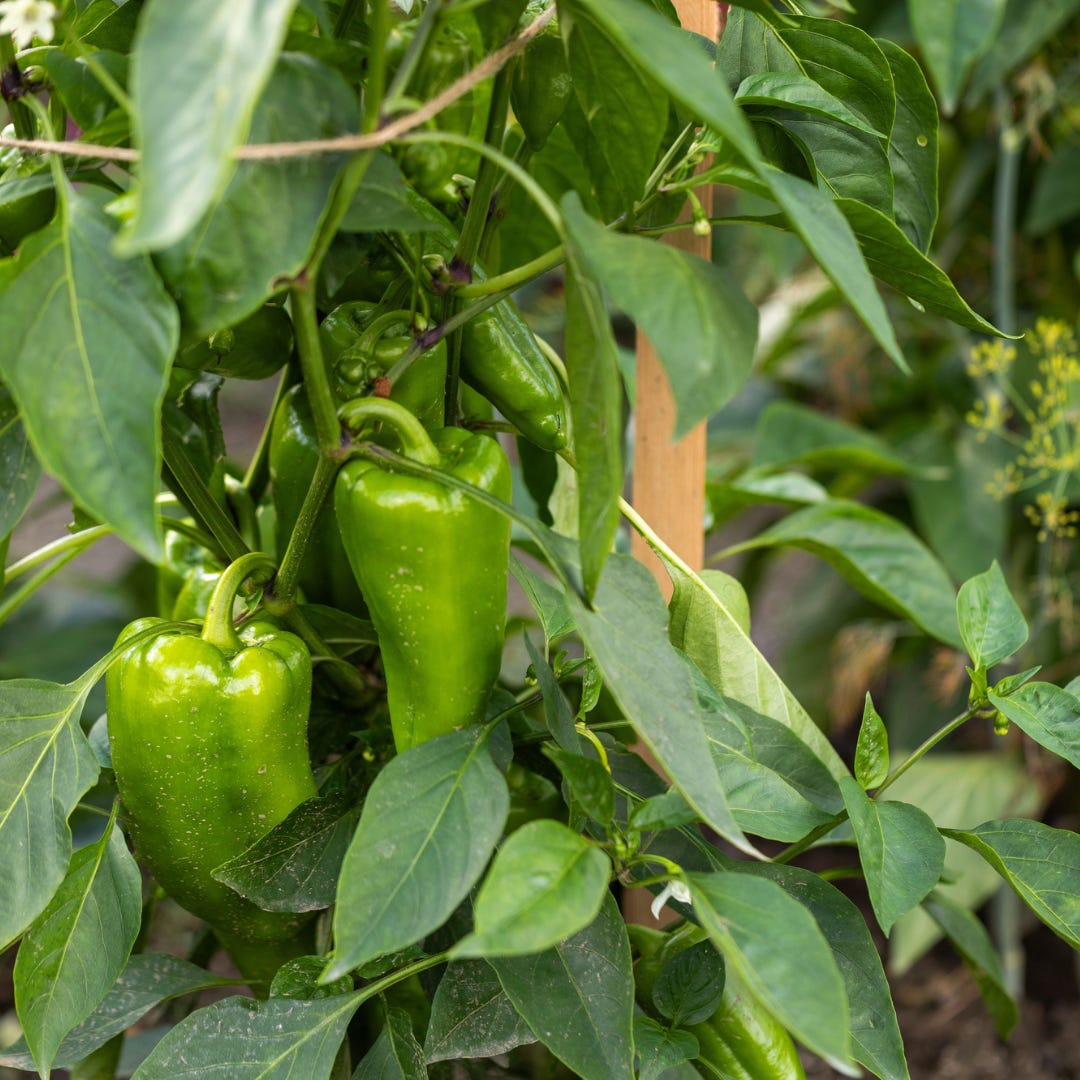
I ate the first jalapeño from my own garden this week.
I planted it in May. I watered it through the dry stretch in July, staked it when it leaned, and pulled the weeds crowding its base. The plant did the rest, which is to say the plant did nearly all of it.
That distinction has changed how the food tastes.
The Plant Cooperated
Here is what I actually contributed: seed, soil, water, attention, and a reasonable location. Everything after that belonged to the plant, the ground, the light, and whatever more-than-human others moved through the yard doing work I never observed.
I made conditions. The pepper made peppers.
When I picked the first one, I said thank you out loud, which felt slightly ridiculous and entirely correct. Robin Wall Kimmerer describes the Honorable Harvest as a set of obligations that run in both directions, including the obligation to share whatever you have taken. Taking is the easy half.
Food tastes different when you were present for the whole arrangement. I know this pepper. I know the week it set fruit and the morning I thought I had lost the plant to something chewing the lower leaves. Eating it was the last movement of a conversation that started in May.
The Garden Is Still Working
Early August is when the first things come in. Older reckonings call this Lughnasadh, the Celtic marker for the opening of the harvest season rather than its completion. The fields me show exactly that. Some cut. Most standing. The whole process visibly unfinished.
If you live in an area with no fields, the turn is already underway around you anyway. The light is shorter at both ends than it was in June. The market tables are heavier than they were in July. Something has come in whether or not you watched it happen.
My garden has given me 3 peppers so far, and the plants are still flowering.
This is what first harvest means. Something is ready while nearly everything else remains in process, and the readiness of the one does not wait on the rest.
Worrying About the Walk Does Not Get You Closer to Walking
I have walked the Le Puy route in France 6 times now, most recently in June, 98.9 miles over 7 days, mostly in silence.
People write to me before their first walk with questions that turn out to be the same question wearing different clothes. What if I am not fit enough? What if my pack is wrong? What if I arrive and discover I cannot do it?
I understand the questions. I asked them myself, at length, for a full year before my first walk. I even revisit them each year now, in somewhat different forms.
Here is what that year of preparation taught me: almost none of it prepared me. Buy the boots. Break them in. Walk some hills. Then stop reading and go, because what prepares you for walking is walking, and no amount of advance worrying can substitute for the first 3 miles with a weight on your back.
Fear presents itself as diligence. It looks like responsible preparation right up until you notice another season has gone by.
The Thing In My Drawer
I have been writing a book called Walking the Threshold: A Reflective Journal for Pilgrims, Hikers, and Edge Walkers.
Most of it is done. Most of it has been done for a while now.
What stops me is the question of how to bring it out, whether to seek a publisher or self-publish or find some third arrangement I have not thought of yet. That question has served as a very respectable place to hide a finished thing.
I am telling you this in a post about first fruits because the irony was becoming difficult to ignore.
A withheld thing does not improve in storage. My peppers would have rotted on the plant. A manuscript does not rot, though something happens to anything you keep waiting on, and the waiting begins to feel like the work itself.
What Comes In Early Is What Gets Given
Across the harvest practices I have studied, the first portion is the offered portion. First grain and first loaf. The last of the harvest goes to the storeroom, and the first of it goes outward.
The logic runs opposite to how I would arrange things. I would offer from surplus, once the count was in and the winter looked secure.
These traditions call for an offering to be made while the outcome is still unknown, from a supply that is visibly insufficient. That timing carries the instruction, as generosity from abundance costs nothing.
My three peppers barely fill a bowl. They are what I have.
What to Watch For
The words to look out for is the phrase “once I have.”
Once I have trained more. Once I have settled the publishing question. Once I have practiced enough to teach it, gathered enough to share it, and so on.
Every one of those is reasonable. Every one also functions as a storage container, and the season keeps moving whether or not the container ever opens.
A Practice for the First Harvest
Let me share some ideas for how to work with this in your life, as I am raising some heady issues here that may benefit from being worked into practice.
Walk alone, without music or a podcast, for 15 minutes or more.
Match one phrase to your steps and repeat it until the words wear down into rhythm. Pick whichever of these fits where you actually are today:
This much has ripened. For when you are counting what you have and finding it small.
We grew this together. For when you are trying to work out how much of this was yours.
Enough has come in. For when the waiting has gone on long enough that you have stopped noticing it.
I was given this. For when the harvest arrived through work that was mostly not yours.
Give the first. For when you already know what you are holding back.
One phrase for the whole walk. Trading among them turns the walk into deliberation, which is the condition you are walking to get out of.
Something specific will surface. It usually arrives around the point where you stop trying for it. When it does, say it aloud to the trees, the road, or whatever is present, then name one person or living being who could receive it this week.
If sitting suits you better than walking, bring it to your sit spot instead. Stay until the place stops noticing you. Then name one thing that has come in since June, and one person it belongs to.

The saying aloud matters. A first fruit acknowledged in silence stays in the drawer.
Mine is a manuscript, and I have now told several thousand people that it exists, which I suspect was the actual point of writing this.
What has come in for you?
If you find this useful, please like or leave a comment.
The Rewilding the Soul EcoSpirituality Certificate at Cherry Hill Seminary, where I teach, is currently underway with this year’s cohort. The September 2026 Contemplative Walking Retreat I am leading on this same section of the Le Puy Camino is full. New offerings, including future retreats and additional teaching opportunities, will be announced here in the months ahead. For now, the practice itself is what matters most, and it is available to you wherever you are walking this week.
Where Insight Meets Earth is a reader-supported publication. To receive new posts and support my work, consider becoming a free or paid subscriber.
I love the distinction: I made conditions. The pepper made peppers. It's such a gentle reminder that we don't control the harvest—we participate in it.
Finally managed to read the whole piece. Lovely analogy to many things in life. And yes, so many things end up in a "storage container" while the season moves on. Great points.