

Last summer, someone asked me a question I would not answer publicly for eight months.
The question itself was simple. Would I be willing to develop and teach a certificate program in ecospirituality? I said yes in the room, went home, and said nothing about it to anyone for a very long time.
The silence turned out to be the most important part of what followed.
What Most Writing About Beginnings Gets Wrong
Most content about beginnings treats them as moments of courage.
You feel the call, you take the leap, the net appears. This framing is everywhere in spiritual and wellness culture, and I understand its appeal. It is clean, it is dramatic, and it gives fear a name that sounds almost noble.
What it leaves out is everything that actually happens first.
Before I said a word publicly about this program, I spent months doing work that no one could see. I reviewed comparable offerings in ecospirituality education. I mapped what was present in the landscape and what was missing. I wrote and rewrote a proposal, developed a syllabus, sought feedback from people I trusted, revised, and sat with the slow, grinding question that follows anyone building something new: what if I do all of this work and no one shows up?
That question followed me for months.
The Gap That Was Already There
The research was clarifying in a way I had not expected.
The more I looked at existing programs, the more visible a significant gap became. Offerings that addressed our relationship with the natural world intellectually, without grounding that relationship in embodied practice. Frameworks for understanding ecospirituality that never asked participants to go outside. Content about kinship with the living Earth that stayed firmly indoors. Approaching this work from a spiritual place without using Christian language.
I was not filling a gap I had invented.
I was responding to something already present, already waiting, already needed by people who did not yet know that what they were looking for existed. That recognition did not remove the doubt. But it changed its shape.

What the Doubt Was Actually Telling Me
I will not pretend the self-doubt was absent from any of this.
The particular flavor of doubt that accompanies building something new is not the sharp anxiety of a single risky moment. It is the quiet, persistent question that accompanies months of preparation, the one that surfaces at the end of a long day of work: what if the need I sense is smaller than I think? What if I build this, and the world does not confirm it? What if I build this and they do not come?
This is the doubt that most writing about beginnings never addresses honestly.
Here is what I came to believe: people who feel no doubt about whether their offering is needed are often those who have not done enough research to understand the need they are actually serving. The doubt was not a warning to stop. It was evidence that I was paying close enough attention to understand what was actually at stake. It sharpened the work rather than stopping it.
Doubt and preparation were not in opposition to each other.
When the Beginning Actually Arrived
The beginning did not arrive when I said yes to the question last summer.
It did not arrive when I submitted the proposal, or when the syllabus was approved, or when the program was listed publicly. The beginning arrived when enough students registered for the program to run. That was the moment other people confirmed that the need I had identified was real, that the work done in eight months of silence had prepared something worth showing up for.
In this way, confirmation is not the same thing as permission.
Confirmation is what happens when the quiet work of preparation finally meets the world and the world responds. It cannot be manufactured, and it cannot be rushed. What it can do, when it arrives, is tell you something important: the beginning was already real long before anyone else could see it.
What Contemplative Traditions Know About Formation
There is something contemplative traditions understand about this kind of preparation that our culture of rapid output consistently misses.
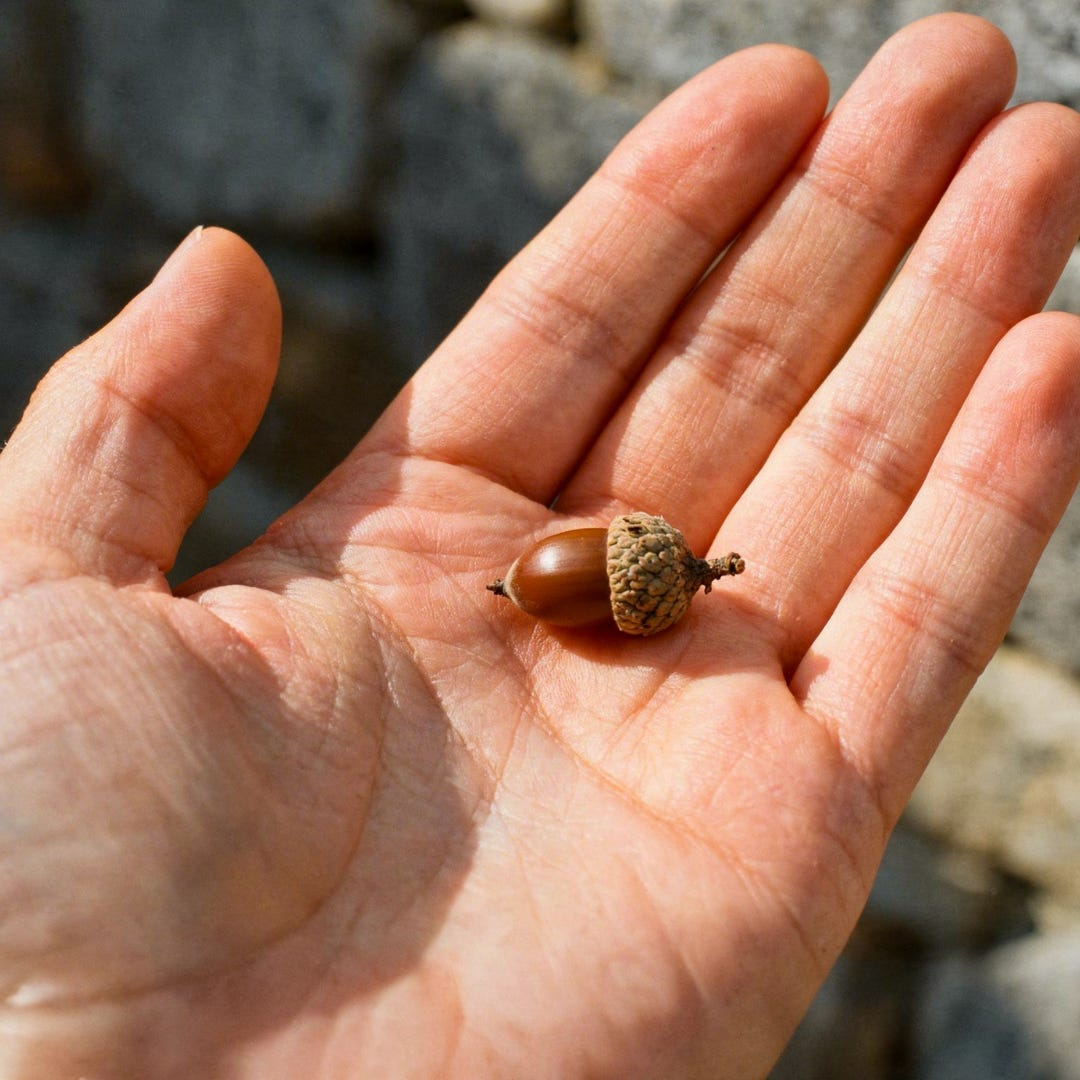
The work done before work becomes visible is not delay. It is not procrastination dressed up as preparation. It is formation. It is the months a seed spends underground before breaking the surface, the winter the GR65 spends under frost before pilgrims begin arriving in spring, the long interior preparation that any genuine threshold requires before it is ready to be named aloud.
You cannot rush it.
What you can do is stay with it honestly. Keep working through the uncertainty. Keep questioning whether the need you sense is real. Keep refining the offering until it reflects what is actually required rather than what is easiest to deliver. Trust that months of invisible work are doing something real even when nothing appears to be happening on the surface.
The Rewilding the Soul EcoSpirituality Certificate begins this week at Cherry Hill Seminary, eight months after a question was asked in a room and answered in silence. It began because I stayed with the work through every stage of uncertainty. It began because enough people recognized the need and said yes.
That sequence matters more than any leap.
What This Means If You Are Building Something Now
I share this not to describe what I built but to name something I suspect many of you are living.
You feel called toward something. You are doing the quiet, invisible work of figuring out what that something actually requires, whether the need you sense is real, whether anyone will show up if you offer it. You may be wondering whether the months of preparation are a delay or a foundation.
They are the foundation.
Real beginnings are rarely leaps into the unknown. They are the moment you finally trust what the long, unglamorous work of preparation has already made ready. If you do not offer what you are being called to offer, no one benefits. Not the people who need what you are building. Not you.
Spring arrives on the path this weekend.
Something is always beginning, and we can always move forward in some form.
Do You Want to Walk Together?
If that moment outside opens something you want to keep opening, go back tomorrow and explore the same spot, or even over a short distance. You may be surprised at what you notice.
The Rewilding the Soul EcoSpirituality Certificate at Cherry Hill Seminary offers a structured path for building outdoor contemplative practice into the fabric of your daily life. It is designed for people who are serious about moving from caring about the earth to belonging to it, who want guidance, community, and a curriculum to support that move. It begins this week.
The September 2026 Contemplative Walking Retreat on the Le Puy Camino in France offers an even more immersive experience. Seven days of walking the GR65 in a small group, with the practice not scheduled alongside the route but woven into every step of it.
Both are there if the solo practice calls you toward something more.
But start outside. Start today. The earth is not waiting for you to enroll anywhere.
It is already practicing.
I'm honored to have been in that room, and congratulate you on taking this big step. It will have repercussions far beyond the course, I believe.