

This morning, something I have been building for eight months begins.
I am not certain how it will go. I have done everything I know how to do to prepare, and what I feel as I stand at this threshold is not the calm confidence of someone who knows the outcome. It is something quieter and more useful than that.
It is readiness.
Why Confidence Is the Wrong Goal
Most content about preparation promises the same thing.
Prepare thoroughly enough, and you will feel confident. Confident you know what is coming. Confident you have the right answers. Confident that what you planned will unfold the way you imagined it. This framing makes preparation sound like a form of control, a way of narrowing uncertainty until it disappears.
After years of teaching, I have come to believe this is exactly backwards.
The purpose of deep preparation is not to eliminate uncertainty. It is to build enough interior steadiness that uncertainty stops being a threat and becomes the space where real learning happens. These are not the same thing, and confusing them produces educators and guides who are technically prepared but not actually free.
What a River Knows About Preparation
There is an image that has stayed with me as I built this program.
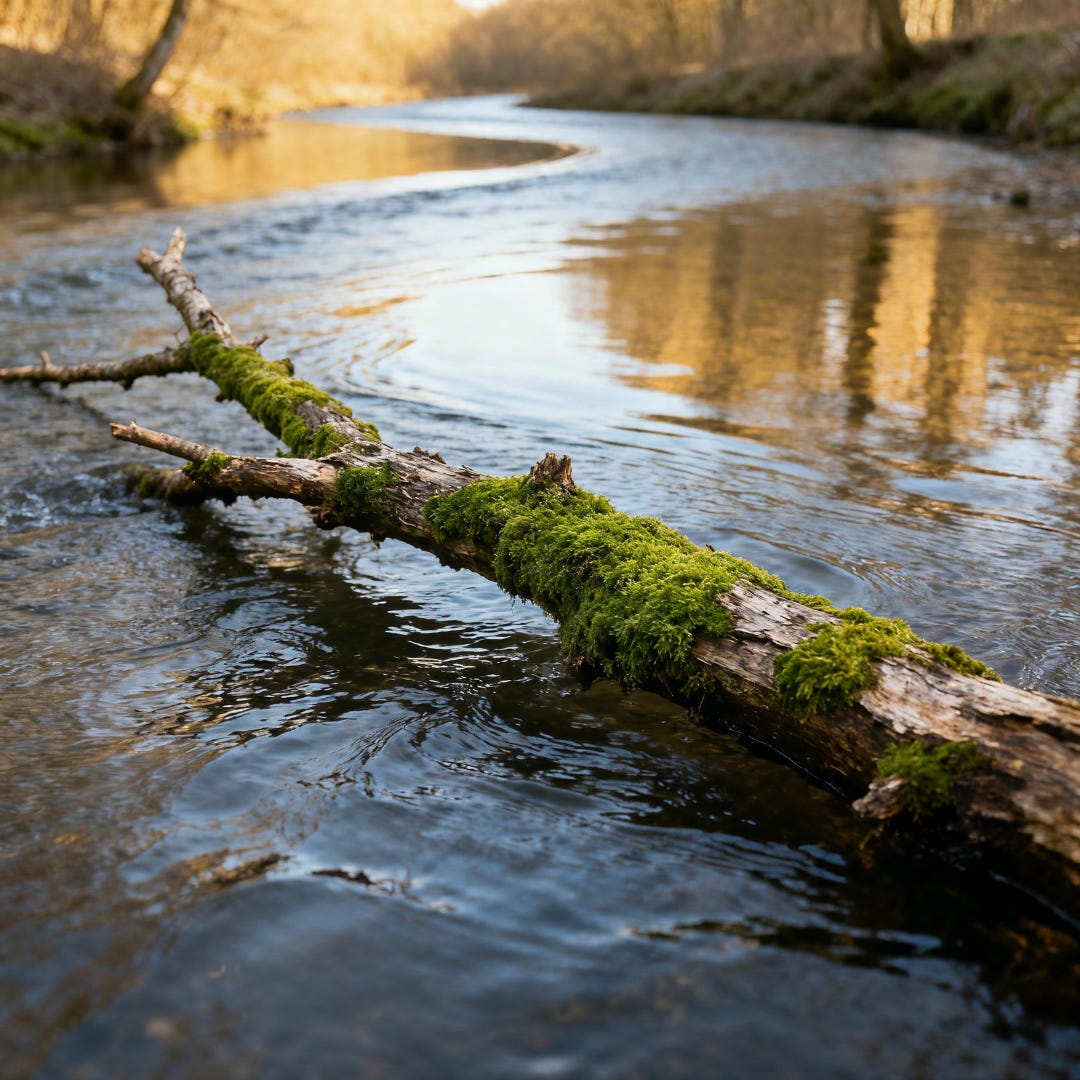
A river does not plan for every obstacle in its path. It does not stop moving when a fallen branch disrupts its direction. It moves around the obstacle gradually, naturally, without losing its essential course. The river can do this not because it anticipated the branch, but because it knows its direction well enough that a disruption does not require it to start over.
Preparation works this way.
When I prepare thoroughly for a learning experience, I am not memorizing a script or locking in a sequence of events. I am internalizing the material, activities, arc of the session, and learning objectives deeply enough that they can flow on their own with minimal oversight. The content no longer requires my full attention to keep moving. Which means my attention is free for something more important.
The people in the room.
What Becomes Possible When the Plan Can Move Itself
This is what years of teaching and significant trial and error produced in my own practice.
When I know the material well enough that I do not need to watch it anxiously, I can be fully present to learners as people rather than as variables to manage. I can notice when someone is confused before they ask. I can follow an unexpected direction in conversation without losing the thread of where we are going. I can let something surprising emerge and work with it rather than around it.
Without that preparation, something different happens.
Without it, the attention that should be on learners gets pulled back to the plan. Every unexpected comment becomes a potential distraction. Every question that does not fit the sequence feels like a threat to finishing on time. The educator who has not prepared deeply enough is always, at some level, managing the gap between what they planned and what is actually happening. That gap consumes exactly the attention that learning requires.
People do not need to see the preparation. What they need to feel is that they are held in a structured, safe environment where they can have their own experience. The structure is what makes the freedom possible. This is not obvious until you have taught long enough to feel the difference from the inside.
Why the Camino Is Not What People Think It Is
I want to say something about why this matters beyond the classroom.
Pilgrimage walking along the Camino routes of France and Spain has been growing in popularity for years, and I am often asked to explain why. The answer I hear most frequently in wellness culture involves words like presence, mindfulness, and disconnecting from technology. These are not wrong, but they miss something more interesting.
What I have seen, across five walks on the Le Puy route and in the faces of pilgrims on every section of the GR65, is something older and more specific than that. It is people learning to see depth in what they previously walked past.
Anyone can see a tree and continue toward what they have decided matters more. That works for many people, and there is room for all kinds of experiences on the path. But for a growing number of people, something in that habitual walking past the living world has stopped working. The Camino offers them, sometimes for the first time, the experience of slowing down enough for what was always there to become visible.
This is not a religious resurgence. It is a depth-seeking one and is precisely why I spent eight months building a program in ecospirituality. The need was already there. I was not creating a demand. I was responding to something already present in people who had run out of surfaces to live on.
What Remains Uncertain This Morning
I will be honest about what preparation has not resolved.
I do not yet know where the students in this program are. I do not know the level of knowledge and experience each person carries into the first session, what questions they are afraid to ask in front of others, what stories they hold that will eventually surface, and what I could not have planned to teach the whole group. People need time to settle into a learning experience before they feel safe enough, or brave enough, to be genuinely present in it. That settling cannot be rushed, and it cannot be prepared for. It can only be held.
This is what I know how to do.
Not because I was born knowing it, but because I prepared enough, failed enough, and paid enough attention over enough years that I trust the structure to hold while the experience unfolds inside it.
The program begins this morning. Eight months of preparation is behind me.
The river knows its direction.
What This Means If You Are Preparing to Offer Something
If you are building something right now, such as a program, a practice, a service, or a way of guiding others, I want to say this directly.
Prepare until you own it. Not until you can recite it, but until you no longer need to watch it anxiously. Prepare until the content can move on its own so that your full attention is free for the people you are serving. Prepare until a fallen branch in the path becomes interesting rather than threatening.
Then step through the threshold.
The confidence you are waiting for will not come until you begin. It comes from within the experience itself, built on the trust your preparation has already earned.
Spring arrived on the path this week.
Begin.
Do You Want to Walk Together?
If that moment outside opens something you want to keep opening up, go back tomorrow and explore the same spot, or even a short distance. You may be surprised at what you notice.
The Rewilding the Soul EcoSpirituality Certificate at Cherry Hill Seminary offers a structured path for building outdoor contemplative practice into the fabric of your daily life. It is designed for people who are serious about moving from caring about the earth to belonging to it, who want guidance, community, and a curriculum to support that move. It begins this week.
The September 2026 Contemplative Walking Retreat on the Le Puy Camino in France offers an even more immersive experience. Seven days of walking the GR65 in a small group, with the practice not scheduled alongside the route but woven into every step of it.
Both are there if the solo practice calls you toward something more.
But start outside. Start today. The earth is not waiting for you to enroll anywhere.
It is already practicing.