

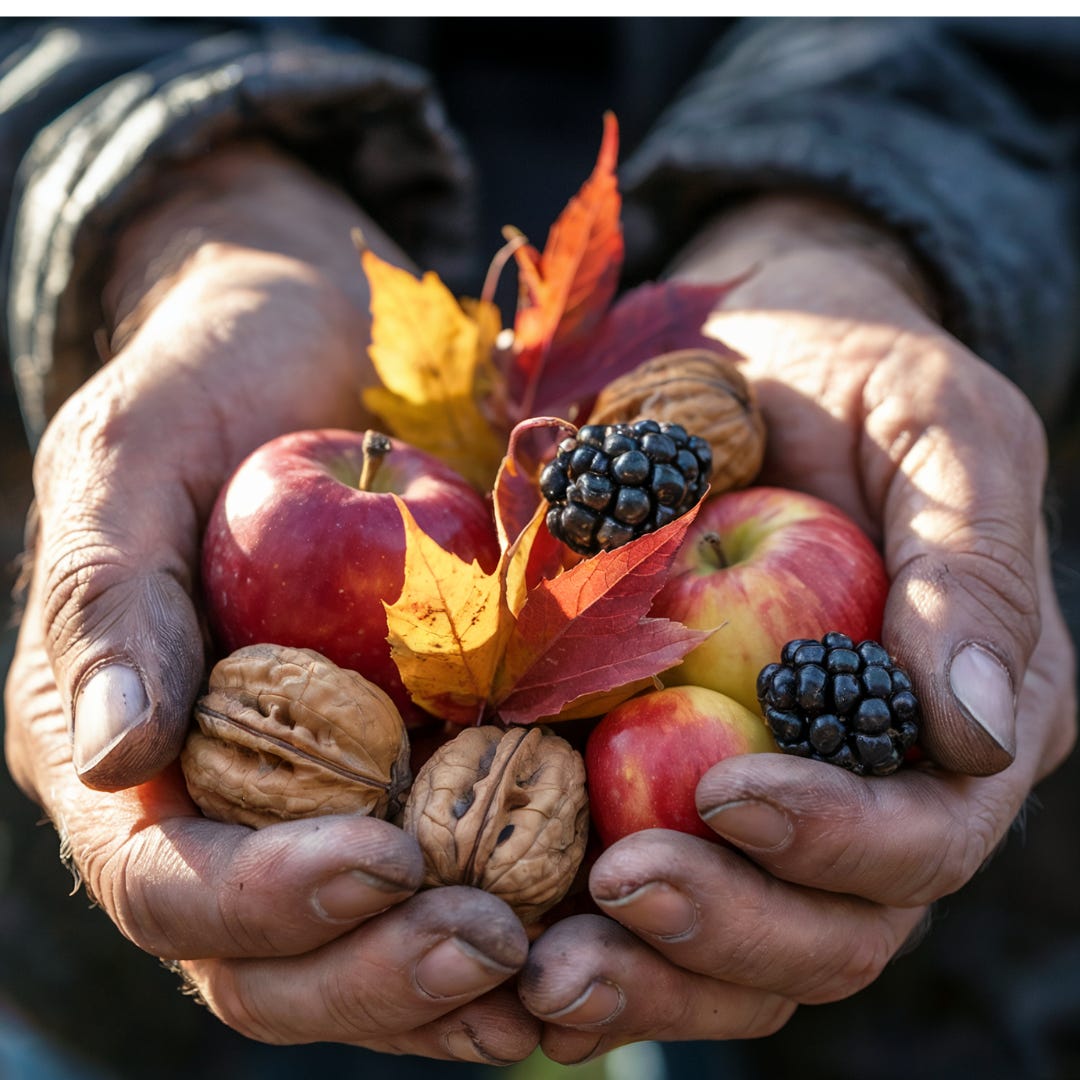
Every time I pick an apple from a tree, get clean water from a running stream, or cut flowers growing outside for my table, I’m receiving a gift.
The land gives without asking for anything in return.
Much of the time, I take without thanking. I take without acknowledging. I take without recognizing that something was given first, freely, without expectation of reciprocity.
This is what we’ve lost in our transactional culture. The recognition that the land and our ancestors gave first.
The Harvest Season Teaches What We’ve Forgotten
Samhain, the Celtic festival approaching on October 31st, marks the end of the harvest season.
This is the time when people historically acknowledged what the land had given. The food that sustained them. The abundance that would carry them through winter. The gifts we received freely from the Earth.
Today, we import products from all over the world. A famine in one location often isn’t felt because food is redirected from other places. We’re disconnected from the land’s gifts in ways our ancestors never were.
Let’s be honest, when was the last time you actually saw a harvest?!
Regardless, the land is still giving.
Every breath you take. Every meal you eat. Every flower you notice. Every tree that shades you. The land gave first, and it continues giving, whether we acknowledge it or not.
The question Samhain asks us is simple: What are we giving back?
Ancestors Gave First Too
There’s a concept common across cultures: we stand on the shoulders of those who came before us.
My ancestors, literal family, spiritual teachers, and intellectual influences gave first. They created ideas, practices, and freedoms I benefit from now. They didn’t wait for my gratitude before offering their gifts.
Not all ancestors did good things. Many ancestors did awful things that continue to hurt and negatively influence us. I don’t have to be thankful for harm.
But I do have an obligation to learn from them.
To try to right their wrongs. To celebrate and extend their good work. To acknowledge that they came and did their thing, and I’m here because of what they did—both good and harmful.
As Samhain approaches, I’m building an ancestor altar at home. I’ll place it on a shelf with items that remind me of and honor my ancestors. A stone. Some photos. Books from those who have really positively influenced my thinking and practices.
This isn’t just a sentimental memory. It’s an acknowledgment that they gave first, and now it’s my turn to give—in honor and in service to those who come after me.
The Difference Between Reciprocity and Transaction
Here is what I have been sitting with: reciprocity is not transactional.
Transaction says, “I do this, therefore I expect that.” Transaction is how capitalism works. How much of our culture is set up. It’s an exchange with expectation. Quid pro quo. If I give, you owe.
Reciprocity is different.
Reciprocity is giving back and sharing forward.
It’s relationship, not exchange.
It’s recognizing that we’re part of a web of giving that doesn’t operate on debt and credit.
The land doesn’t give you an apple and expect payment. Your ancestors didn’t create knowledge expecting you to repay them. They gave because that’s what living systems do, they give.
Transactionalism doesn’t readily translate to spirituality or religious practice. But reciprocity does, because reciprocity is about relationship. About being part of something larger than yourself. About recognizing you’re held in a web of giving.
My Gift Is Sharing
During the 13-day challenge I recently completed, people shared some very kind and encouraging words. Some told me they'd tried the new processes and practices I’d described, and that doing so had been helpful to them.
This is reciprocity happening naturally.
I shared what I’d learned. They tried it and shared back what they discovered. Neither of us was transacting. We were participating in a web of giving and receiving. My gift—what I have to offer—is sharing and teaching. Leading by example. Challenging others with questions and invitations to reflect.
I’m a life-long educator. I have academic and professional training. Part of how I practice reciprocity is using that training to help bring these practices to others.
I need my own examples and practices, of course. But part of my reciprocity to the land and ancestors who gave me these gifts is passing them forward.
Not hoarding. Not keeping. Not making people pay for access to what was given freely to me.
Sharing forward. That’s reciprocity.
Taking the First Step to Give
The land doesn’t wait for you to reciprocate before giving you the next breath.
Your ancestors didn’t wait for your gratitude before creating the world you inherited. They gave first. They always gave first.
Now it’s our turn.
Not because we owe a debt. Not because there’s an expectation. But because we’re part of this web of life, and giving is what living things do.
So how do we practice reciprocity? How do we give first, without expectation, the way the land and ancestors gave to us?
Start small. Start where you are.
Practical Reciprocity Practices You Can Try This Week
Here are some accessible ways to practice reciprocity, especially as Samhain approaches:
With the Land:
Thank the land aloud when you take something. Next time you pick an apple, drink from a stream, or gather flowers, speak your gratitude out loud. The land gave first. Acknowledge it.
Leave biodegradable offerings. When you’re out walking, leave something for the land. Bread crumbs for birds. Nuts for squirrels. Water for creatures. These small gifts matter.
Pick up litter. When you notice trash on a trail or in a park, pick it up. This is giving back to the land that holds you.
Plant native species. If you have any outdoor space, plant something native. Give back to the ecosystem that sustains you.
Compost. Give your food scraps back to the soil instead of sending them to the landfill. Let what the earth gave return to the earth.
Reduce consumption. Taking less is a form of giving. Buy less. Use less. Consume less. Let the land rest.
With Ancestors:
Build an ancestor altar. As I’m doing this week for Samhain, create a small space to honor those who came before. Photos, objects, books—whatever reminds you of their gifts. (I’ll share more about this practice tomorrow.)
Visit a cemetery to give thanks. I do this regularly. Go to a cemetery and speak gratitude to ancestors, both yours or others, who gave first.
Learn their stories. Research your ancestors. Learn what they did, both good and harmful. Honor the good. Learn from the harm. Give them the gift of being remembered.
Share their wisdom forward. If an ancestor taught you something valuable, teach it to someone else. Pass the gift along.
With Community:
Share knowledge freely. If you’ve learned something useful, share it. Don’t hoard. Don’t gatekeep. Give it forward.
Teach children about reciprocity. Help the next generation understand that the land gives first, and we give back.
Support indigenous land return. Reciprocity includes acknowledging whose land you’re on and supporting their sovereignty and land stewardship.
Respond thoughtfully. When someone shares with you—in person or online—give them the gift of patient, attentive engagement. This is reciprocity too.
You don’t have to do all of these. You don’t have to do any of them perfectly.
Just choose one. Try it this week. Try it today. Give first, without expectation of return.
That’s what reciprocity actually is.
What Samhain Asks of Us
As October ends and Samhain approaches, we’re standing at the threshold of the harvest season ending and the dark half of the year beginning.
This is the traditional time to acknowledge what we’ve received. What the land gave. What our ancestors gave. What we’ve been given freely, without expectation.
Then ask, What am I giving back? What am I giving forward?
Not as a transaction. Not as payment for what we’ve received. But as participation in the web of giving that sustains all life.
The land gave first. The ancestors gave first. They didn’t wait for us to reciprocate before giving.
Now it’s our turn.
Start small. Thank the land aloud. Build an altar. Pick up litter. Share knowledge forward. Give first, without expectation. Write this down and journal about them to process and work through them.
This is the practice Samhain invites us into. This is what reciprocity actually means.
What’s one way you’ll practice reciprocity this week? What will you give first?
Reply and let me know. I’m learning this practice alongside you.
Walking in reciprocity,
Jeffrey
P.S. Tomorrow I’ll share more about building an ancestor altar for Samhain—the practical steps, what to include, and how to make this practice your own. If you’re interested in learning more about contemplative walking as spiritual practice, or about the Le Puy Camino retreat I’m leading in September 2026, subscribe to receive these ongoing reflections.