

If you find this post helpful,
please like it + leave a comment
about what it shifted in you.
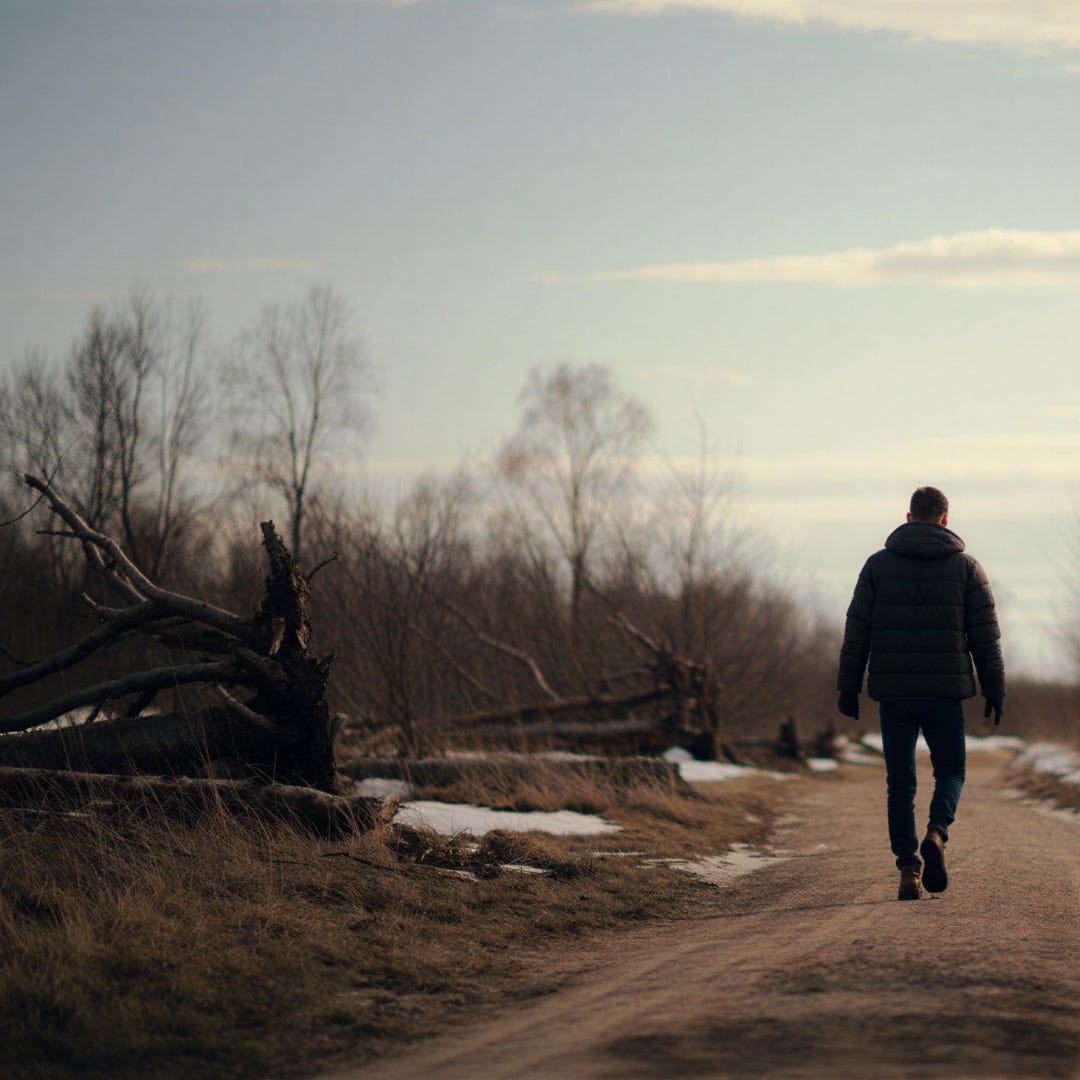
Today is Martin Luther King Jr. Day.
The images are familiar. Crowds marching through streets. Bodies moving together toward justice. Feet on pavement, voices raised, presence offered as protest. MLK understood something profound about witness, that it requires showing up bodily for those who suffer.
Those marches were public, prophetic, and collective.
There is another kind of witness. Quieter. Internal. Daily. Less visible but no less necessary.
This is the witness I want to explore today. Not as a replacement for public action, but as its spiritual ground. The contemplative practice that makes sustained engagement possible without collapse.
A World That Cannot March
The civil rights movement gave voice to the voiceless among people. It insisted that those denied recognition be seen, heard, and valued. The marches made visible what the dominant culture refused to acknowledge.
The natural world faces something similar.
Species disappearing. Ecosystems collapsing. Ancient forests cleared. Coral bleaching. Insects vanishing. The litany is long and grows longer. Unlike human communities, however, the more-than-human world cannot organize. No species can march for itself. No forest can demand recognition. No dying coral reef can raise its voice in protest.
This is not to equate struggles or claim equivalence. It is to notice that voicelessness takes many forms. Civil rights addressed one. The climate crisis and mass extinction reveal another.
The natural world needs witnesses.
Not only activists, though activism matters. Not only scientists, though data matters. It needs people who will pay attention to what is dying. People who will hold that attention without turning away, without numbing out, without collapsing into despair.
This is what contemplative walking offers.
The Difference Between Activism and EcoSpirituality
I want to be careful here.
Activism fights for rights through organizing, protest, policy change, and collective action. This work is essential. I am not suggesting contemplative walking replaces it.
EcoSpirituality does something different.
It connects us to the natural world through relationship. It cultivates kinship with the more-than-human world. From that connection, advocacy emerges. But the advocacy is rooted in love rather than obligation. It flows from relationship rather than ideology.
This distinction matters.
Obligation burns out. Love sustains. When I march, I can only march so long. When I witness because I love what I am witnessing, the practice feeds itself.
Walking as witness is how that love develops. Step by step, attention is offered to what is actually here. The birds still singing. The trees still breathing. The life still persisting despite everything working against it.
The quiet witness notices what is dying. The quiet witness also celebrates what is living. Both are necessary. Grief without celebration leads to despair. Celebration without grief leads to denial.
What Paralysis Actually Is
In my work as a University Chaplain, I see students paralyzed by climate grief.
They know the data. They understand the trajectory. They can glimpse what the world may be like for their children. The scale of the crisis feels so vast that any action seems meaningless. So they do nothing. Or they cycle between frantic activity and complete withdrawal. Neither is sustainable.
Paralysis is not laziness. It is the nervous system’s response to an overwhelming threat. When we cannot fight and cannot flee, we freeze. This is biology, not moral failure.
The students who are paralyzed are often the ones who care most deeply. Their grief is evidence of their love. Their despair comes from paying attention.
What they need is not more information about the crisis. They have plenty of information. What they need is a practice that allows them to hold what they know without being crushed by it.
This is where quiet witness comes in.
Active Hope Is Not a Feeling
Ecophilosopher Joanna Macy developed a framework that changed how I understand this.
She calls it Active Hope. The name is important. Hope, in this framework, is not a feeling you either have or lack. It is not optimism about outcomes. It is not believing things will turn out fine.
Active Hope is something you do.

Macy describes three steps.
First, you take in a clear view of reality. You acknowledge what you see and how you feel about it. No denial. No minimizing. Just an honest perception of what is actually happening.
Second, you identify what you hope for. Not what you expect, but what you hope for. The direction you want things to move. The values you want to see expressed. This is intention, not prediction.
Third, you take steps to move yourself or your situation in that direction.
The critical insight is that Active Hope does not require optimism. You can practice it even when you feel hopeless about outcomes. The guiding force is intention, not probability. You choose what you aim to bring about and let that intention guide your actions.
This is engagement without guarantees, and not denial.
Walking as the Practice
How does contemplative walking embody Active Hope?
The first step is clear seeing. When I walk with attention, I notice what is actually here. The trees stressed by drought. The birds whose populations have declined. The insects that no longer appear in the numbers they once did. I also notice what is thriving. What is adapting. What is persisting.
Clear seeing means holding both.
The second step is intention. As I walk, I carry my hope for a livable future. Not certainty that it will come, but commitment to that direction. My intention is to live in kinship with the more-than-human world, to notice and honor what is here, to let my attention be a form of respect.
The third step is action. Sometimes the action is simply walking with attention. Sometimes the walk reveals a specific step I can take. A conversation to have. A habit to change. A small contribution that is actually mine to make.
The quiet witness does not try to save the world. The quiet witness offers presence to one small part of it. This is right-sizing. Finding the scale of action that is genuinely yours rather than being paralyzed by the scale that is not.
A Practice for Today
If you want to begin walking as witness, here is a simple way to start.
Choose a place where you can walk for at least 15 minutes. It does not need to be wilderness. A park, a neighborhood with trees, even a single block with plants growing through sidewalk cracks.
As you walk, notice what is living. Not as background, but as presence. The specific beings sharing this place with you. Let your attention rest on them one at a time. A tree. A bird. A patch of moss. Whatever is there.
Then notice what is struggling. What shows signs of stress, damage, decline. Do not look away. Let yourself feel whatever arises. Sadness. Grief. Anger. Fear. All of it is appropriate.
Finally, ask one question: What small action is mine to take?
Not what action would save everything. Not what action would be enough. Just what is mine? It might be as simple as returning tomorrow. Offering your attention again. Letting your consistent presence be the practice.
This is the quiet witness.
Not protest. Presence. Not fixing. Attending. Not saving the world. Loving one small part of it, steadily, over time.
The Ground from Which Action Grows
I want to be clear about what I am not saying.
I am not saying contemplative walking is a sufficient response to the climate crisis. Policy change, collective action, and systemic transformation: all are necessary. The quiet witness is not an alternative to engagement. It is the spiritual ground that makes sustained engagement possible.
When I walk with attention to what is dying, something happens in me. My grief becomes specific rather than abstract. My love becomes rooted in actual beings rather than ideas about nature. My capacity to stay engaged without burning out increases.
The quiet witness changes the one who witnesses.
Over time, it also clarifies action. When you know a place intimately, you know what it needs. When you love specific beings, you understand what threatens them. When your grief is grounded in relationship, your advocacy flows from that relationship.
Presence precedes protest.
The marches MLK led did not emerge from nowhere. They emerged from communities who had been paying attention for generations. Who knew their suffering intimately. Who had cultivated the spiritual resources to sustain a long struggle.
The quiet witness builds those resources.
One walk at a time. One moment of attention. One small practice of love for a world that cannot march for itself.
On Wednesday, I will share what a discarded Christmas tree in a Paris park taught me about our severed relationship with the Earth. An EcoSpirituality lens makes visible what rushing past would miss.
Walk With Me
If this resonates, I invite you to subscribe to Where Insight Meets Earth, my weekly reflections on contemplative walking, ecospirituality, and embodied practices for navigating what overwhelms us.
If you want to delve more deeply into this, I am launching the Rewilding the Soul EcoSpirituality Certificate at Cherry Hill Seminary in March 2026—a year-long journey exploring Earth kinship through contemplative practice. Learn more here.
In September 2026, I’m leading a contemplative walking retreat on France’s ancient Le Puy Camino, seven days of silence, movement, and practices for metabolizing what sitting cannot, in the most beautiful landscape you can imagine, on a 1,000-year-old pilgrimage path. Details here.
Hit reply anytime. I read and respond to every message.
~ Jeffrey