

Hermann is gone.
The tree in the Luxembourg Garden in Paris that I sat with regularly, who taught me about patience and presence, has been completely removed. Not just cut down, but removed so thoroughly that no trace of his existence remains.
This leaves me pausing in thought. There was no need to erase him entirely. The garden celebrates life in a world where there is so much death. His stump could have remained. Some acknowledgment of decades of oxygen, shade, relationship.
Instead, nothing. As if he never existed. Not surprising as this is a formal garden, but sad nonetheless.
This is grief I carry. But it’s not the only grief.
What I See Everywhere
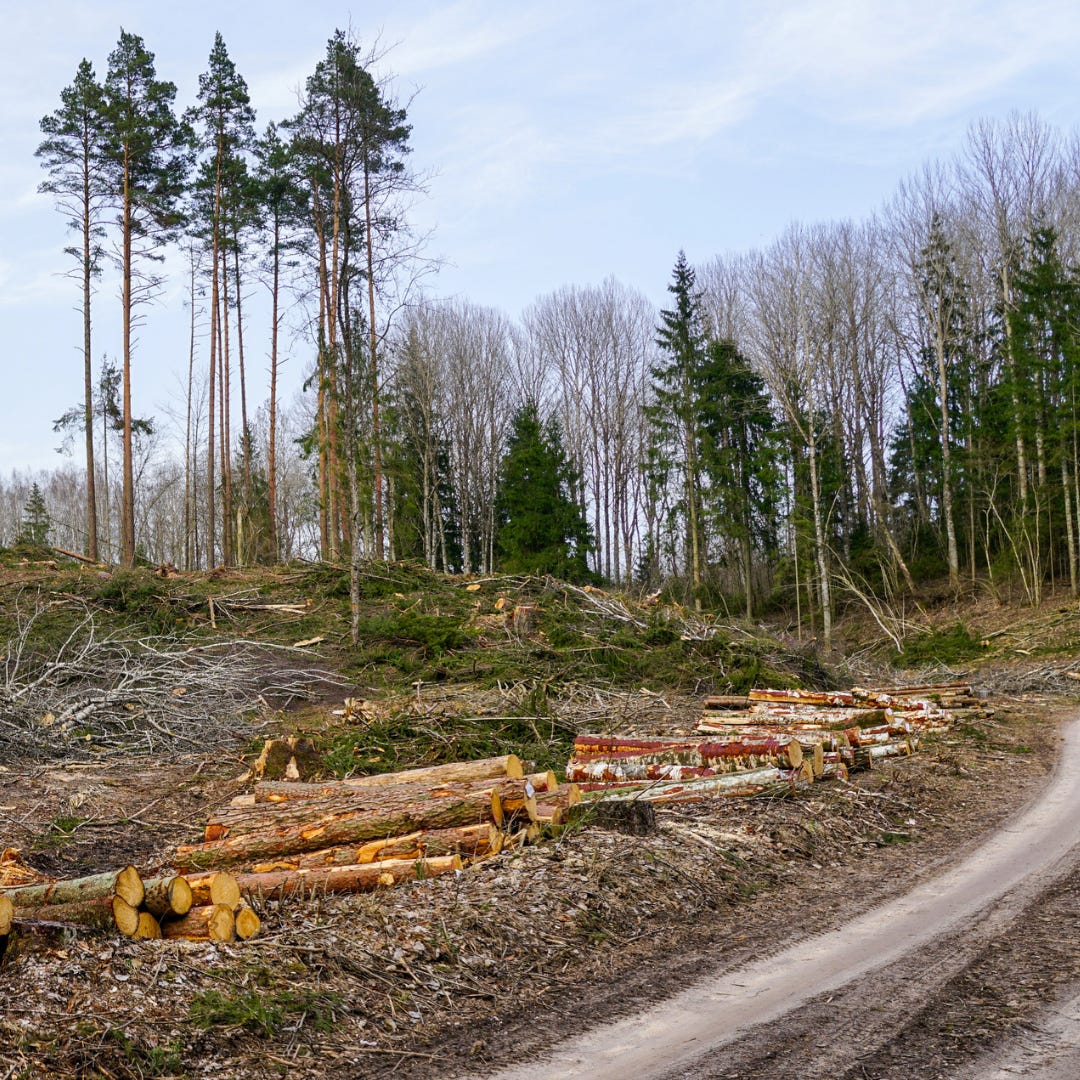
Every time I turn around, I see more forests cleared for housing, warehouses, or general development.
I don’t mourn one specific place. I mourn the pattern. The relentless conversion of living ecosystems into constructed landscapes with no ecological planning.
Housing is needed. Warehouses serve a purpose. I understand this tension. But eventually, there will be little remaining if development continues without addressing ecological concerns.
On my Camino walks, I’ve witnessed this destruction firsthand. In Spain, the path has become so heavily trafficked that construction has grown everywhere, it’s now part of a spiritual tourism industry. Hotels. Restaurants. Infrastructure to serve pilgrims seeking meaning.
I see this less in France along the Le Puy route. That path remains less traveled. For now.
But I know what’s coming. I’ve seen the pattern repeat. What starts as sacred path becomes commercial route. What begins as relationship with land becomes extraction from it.
This grief is real, and it connects to something older.
The Pattern Across Time
My grief connects to displacement of the Gaulish peoples. To forests that were cleared when Rome conquered. To ancient ways lost when empire arrived.
I’ve learned that all peoples have been vanquished by whatever power was stronger at the time. The Gauls are only one example. This still happens today.
What surprises me most is that people get surprised when violence and desolation occur. This has happened since before recorded history. It never stopped. Only our awareness of it stopped.
If anything, I’m surprised that people remain surprised. The pattern is visible everywhere if we’re willing to see it.
Perhaps it is safer for us to pretend it is not there until we are forced to confront it.
What Active Hope Taught Me
I recently read Active Hope (revised edition) by Joanna Macy and Chris Johnstone, and it helped me understand how to work grief into regular practice without being paralyzed by it.
Macy’s older works I found challenging. But this revision offers something more actionable. A framework for holding grief alongside hope without falling into despair or toxic positivity.
Here’s what Macy and Johnstone write:
“Active Hope is a practice. Like tai chi or gardening, it is something we do rather than have. It is a process we can apply to any situation, and it involves three key steps. First, we start from where we are by taking in a clear view of reality, acknowledging what we see and how we feel. Second, we identify what we hope for in terms of the direction we’d like things to move in or the values we’d like to see expressed. And third, we take steps to move ourselves or our situation in that direction.
Since Active Hope doesn’t require our optimism, we can apply it even in areas where we feel hopeless. The guiding impetus is intention; we choose what we aim to bring about, act for, or express. Rather than weighing our chances and proceeding only when we feel hopeful, we focus on our intention and let it be our guide.”
This framework has helped me change how I hold ecological grief.
The Difference Between Honoring and Wallowing
When the two squirrels drowned recently in that rain bucket, I felt grief. When the tree in my yard had to be cut down, I felt grief. When Hermann was removed completely, I felt grief.
But I moved forward. I didn’t get paralyzed.
This is crucial: honoring loss keeps us in the cycle of life. Wallowing in loss disrupts a cycle we cannot control, freezing us in place and forcing ourselves not to move on.
When we cannot move forward, we cannot help in other situations where grief and death are just as real. We cannot serve or hold space for others as we ourselves are stuck.
As Macy and Johnstone write: “Hope is about becoming active participants in the process of moving toward our hopes and, where we can, realizing them.”
Active participants. Not passive grievers. Not toxic optimists who refuse to acknowledge loss.
Active Hope doesn’t require believing things will get better. It requires choosing intention and taking steps aligned with that intention.
Your Practice Today
Here’s what I’m inviting you into: honor what’s been lost.
Find a place outside. Think of one thing in the natural world you know has been lost or is disappearing, such as a species, a forest, a glacier, clean water somewhere.
Spend five minutes acknowledging this loss. You might cry. You might feel anger. You might feel numb.
All of it is valid. Grief is part of our work.
But don’t stop there. After acknowledging loss, ask yourself what your intention is. What direction do I want to move in? What step can I take today?
This is Active Hope. See reality clearly. Identify what you hope for. Take one step.
Hermann is gone. Forests are being cleared. Species are disappearing. This is real.
I choose to move forward anyway, and not because I’m optimistic. Because intention guides me toward action even when hope feels impossible.
Tomorrow, we move into Days 10-13: TAKE ACTION. But today, honor the loss. Feel the grief.
Then choose your intention. Let it guide your next step.
I’m developing a 13-Day EcoSpirituality Challenge and sharing what I’m learning here. Tomorrow: giving something back as we move into action. If you’d like to practice along, consider subscribing for reflections on EcoSpirituality, sacred walking, and Active Hope.
What are you grieving today? I’d love to hear in the comments below.