

Holding space has become spiritual jargon.
You hear it everywhere. Yoga teachers say it. Therapists say it. Retreat leaders promise it. The phrase shows up in Instagram captions and wellness marketing until it feels like empty words. Beautiful, but meaningless.
But as a certified Spiritual Director, University Chaplain, and ordained Wild Guide, I can tell you that holding space is one of the most powerful practices I know. When done well, it creates a possibility for transformation that fixing, advising, or teaching never could.
The problem? Most people, including me early on, don’t actually understand what it means.
What Holding Space Is NOT
Let me start with what holding space absolutely is not.
It’s not fixing someone’s problem. It’s not offering solutions or advice. It’s not making someone feel better or helping them see the bright side. It’s not filling uncomfortable silence with reassuring words.
It’s not taking responsibility for another person’s healing, growth, or transformation.
In my Spiritual Direction training, we learned an acronym: WAIT—Why Am I Talking? It reminded us to talk less, influence less, and lead less. To let people surface what they’re experiencing without our interference.
This goes against everything modern culture teaches us.
We’re trained to fix, solve, and advise. We equate love with helping. We measure our worth by being useful. When someone shares pain or struggle, our immediate instinct screams: “How can I make this better?”
But holding space asks us to resist that instinct entirely.
What Holding Space Actually IS
Here’s what I’ve learned from years as a chaplain and spiritual director:
When someone brings you their pain, their doubts, their confusion—those things aren’t asking to be fixed. They’re asking to be witnessed. To be acknowledged. To be heard, and to be held.
That’s it. That’s the practice.
Holding space means being completely present without agenda. Creating a container where anything can emerge without judgment. Witnessing without trying to change. Trusting that people know what they need, even when they can’t articulate it yet.
It means walking alongside someone in whatever journey they’re on, without making them feel inadequate, without trying to fix them, without needing to control the outcome.
As a university chaplain at NYU, this is my daily practice. Students come to me carrying weights they often can’t name. They don’t need me to fix their struggles or explain their experiences. They need someone to see them, acknowledge them, hear them without judgment.
They need to know they’re okay. That their learning takes time. That when they struggle, somebody is there listening without trying to change them.
That’s holding space. Presence without agenda. Witness without fixing.
Why This Is So Rare
I spent decades as an educator before becoming a chaplain and guide.
My job was explaining things, then challenging students to apply that knowledge. Teaching mode runs deep. When someone shares a problem, every fiber of my training wants to jump in with answers, frameworks, and solutions.
For a time, I worked in education managing projects, so not only would I try to fix, I would organize entire processes that would then be evaluated for success. This is not holding space at all.
Holding space requires the opposite. It means holding myself back from giving answers because everybody is the expert in their own spiritual life, not me.
This is uncomfortable. Deeply uncomfortable.
We fill silence because it feels awkward. We offer advice because sitting with someone’s pain without fixing it triggers our own helplessness. We think love means solving. We fear that if we don’t help, we’re failing somehow.
But here’s what I’ve learned: when we try to fix someone or give them advice we think they need, we’re actually taking their power away from them. When we trust they are their own best guide and don’t fill the space with our words, we give them the chance to hear their own intuition and learn what works best for them
How Nature Models This Perfectly
You know what holds space better than any human? The earth itself.
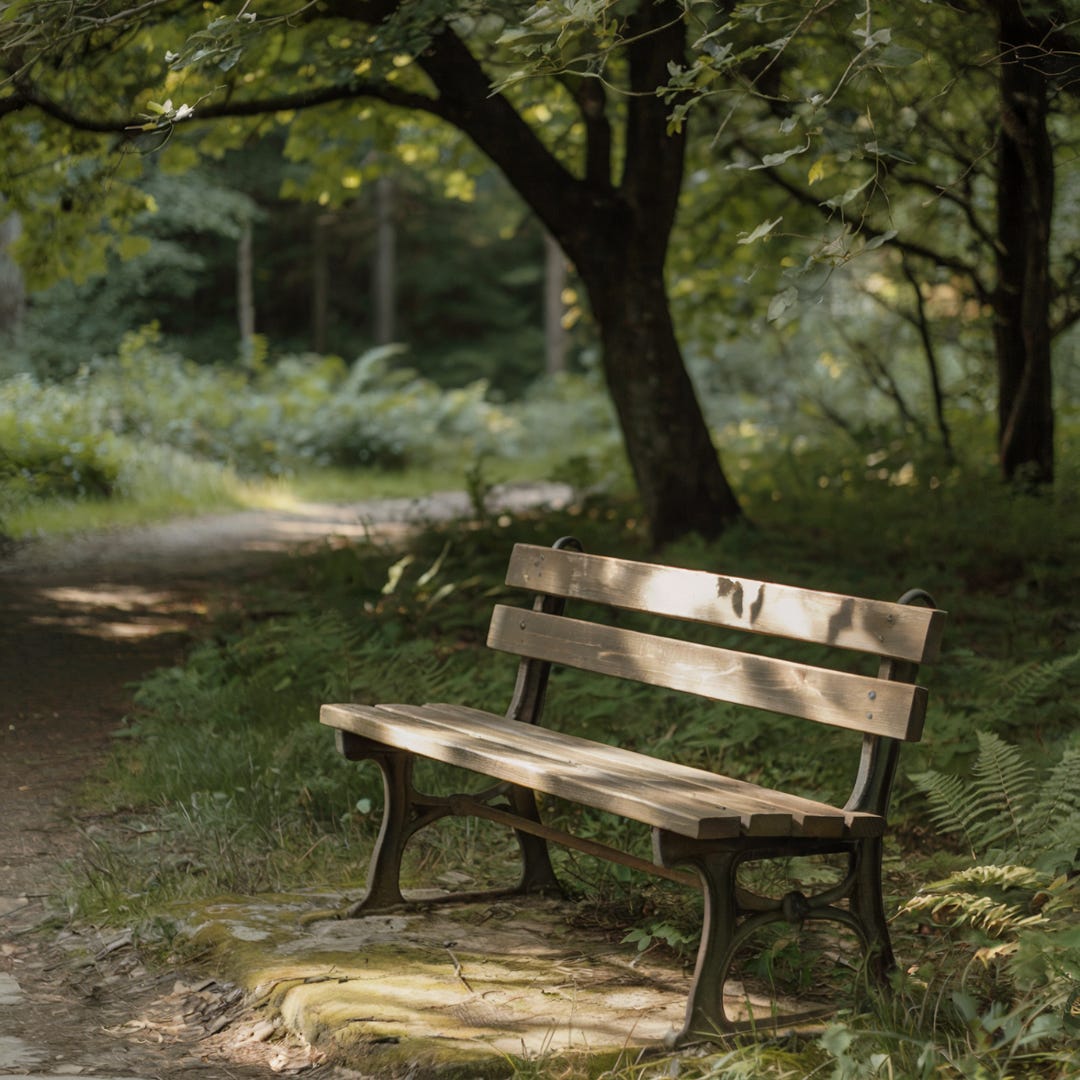
Trees don’t try to fix you. The path doesn’t ask why you’re walking. Landscape witnesses your presence without judgment or agenda. Ground holds your weight without requiring explanation.
This is why pilgrimage works. Why contemplative walking transforms. Why spending time in nature heals in ways therapy sometimes can’t.
The natural world demonstrates perfect space-holding. It receives you exactly as you are. It makes no demands for performance, disclosure, or emotional labor. It simply... holds.
After five Camino walks, I’ve watched this happen hundreds of times. People arrive carrying weights they can barely name. The path doesn’t ask them to explain. It just holds them, mile after mile, while they figure out how to hold themselves.
A Moment That Taught Me
Once, in Spiritual Direction training, I worked with someone who was trans.
They became very emotional talking about the many years they’d spent not feeling like themselves before finally deciding to pursue options for transition. They teared up as they described those lost years.
Every instinct in me wanted to comfort them, reassure them, help them see it wasn’t wasted time. Every educator bone in my body wanted to reframe their experience.
But I held space instead. I stayed present. I witnessed their tears without trying to stop them. I trusted that their grief needed expression, not fixing.
That silence, that witnessing without interference, allowed something deeper to surface. They weren’t looking for comfort. They were finally letting themselves feel what they’d carried alone for so long.
If I’d filled that space with reassurance, I would have taken that moment away from them.
What This Looks Like in My Retreat
When I announced the 2026 Contemplative Walking Retreat, this understanding shaped every structural choice.
It’s an individual retreat with me as a collective guide. I hold space and support, as much or as little as each person wants. This is why it is limited to 4 people, so individuals are free to ask me to hold space or not without being lost in a crowd. There’s a daily walking structure and many shared meals. But people walk on their own, experiencing healing individually through relationship with the land.
Here’s what’s critical: you share what you want, when you want. Speak when called to speak. Stay silent when silence serves better.
No pressure to participate. No requirement to “be on.” No expectation that you’ll perform gratitude, process emotions aloud, or demonstrate transformation for the group.
As a Wild Guide, I offer prompts and invitations because most people are unfamiliar with kinship practices with the land. Our culture has driven us so far from earth connection that guidance is helpful. While prompts are offered, they are never required.
I ask: “What did you notice? What did you notice about yourself?” Then I invite people to go deeper in the next walk, if they choose.
This is what I will be offering in the ReWilding the Soul EcoSpirituality Certificate that begins in March. That’s holding space within structure. Creating a container without control. Offering guidance without fixing.
How to Practice This
For yourself:
Stop trying to fix your own struggles. Just walk with them. Let the path hold what you can’t yet resolve. I hold space for myself each spring when I walk the Camino for a week, letting the natural world hold space for me, engaging in sacred kinship without agenda.
For others:
Presence over advice. Questions over answers. Silence over filling space. Trust over rescue.
When someone wants you to fix them or give answers, resist. The hardest lesson I’ve learned is that people are excited about different things and need to process in their own ways. What moves me might not move them. What they need might not be what I’d choose for them.
That’s okay. That’s the practice.
What Becomes Possible
Here’s what spiritual teachers know:
To be completely seen, heard, and understood in the presence of another living soul is one of the most healing forces in the world.
Holding space isn’t passive. It’s actively choosing presence over fixing. It’s trusting that the path, the practice, and the person know what’s needed, even when you don’t.
This is what makes transformation possible, being witnessed without being changed, held without being fixed, seen without being solved.
Not because someone gave you answers. Not because someone made you feel better. But because someone trusted you enough to let you find your own way, in your own time, at your own pace.
That’s what the earth does. That’s what pilgrimage offers. That’s what I’m learning to do, one silent walk, one held space, one moment of resisting the fix at a time.
Walk With Me
If this resonates, I invite you to subscribe to Where Insight Meets Earth. Each week I share reflections on contemplative walking, ecospirituality, and deepening kinship with the more-than-human world—for seekers moving from digital overwhelm to grounded presence.
Hit reply anytime. I read and respond to every message—and I promise to hold space for whatever you share without trying to fix it.
Walking beside you,
Jeffrey
Wow, the WAIT acronym truely stood out to me! It's so powerful to realize that holding space is not about fixing. Our culture trains us to jump in, but resisting that instinct is a game-changer. This makes so much sense, thank you for clarifying!