

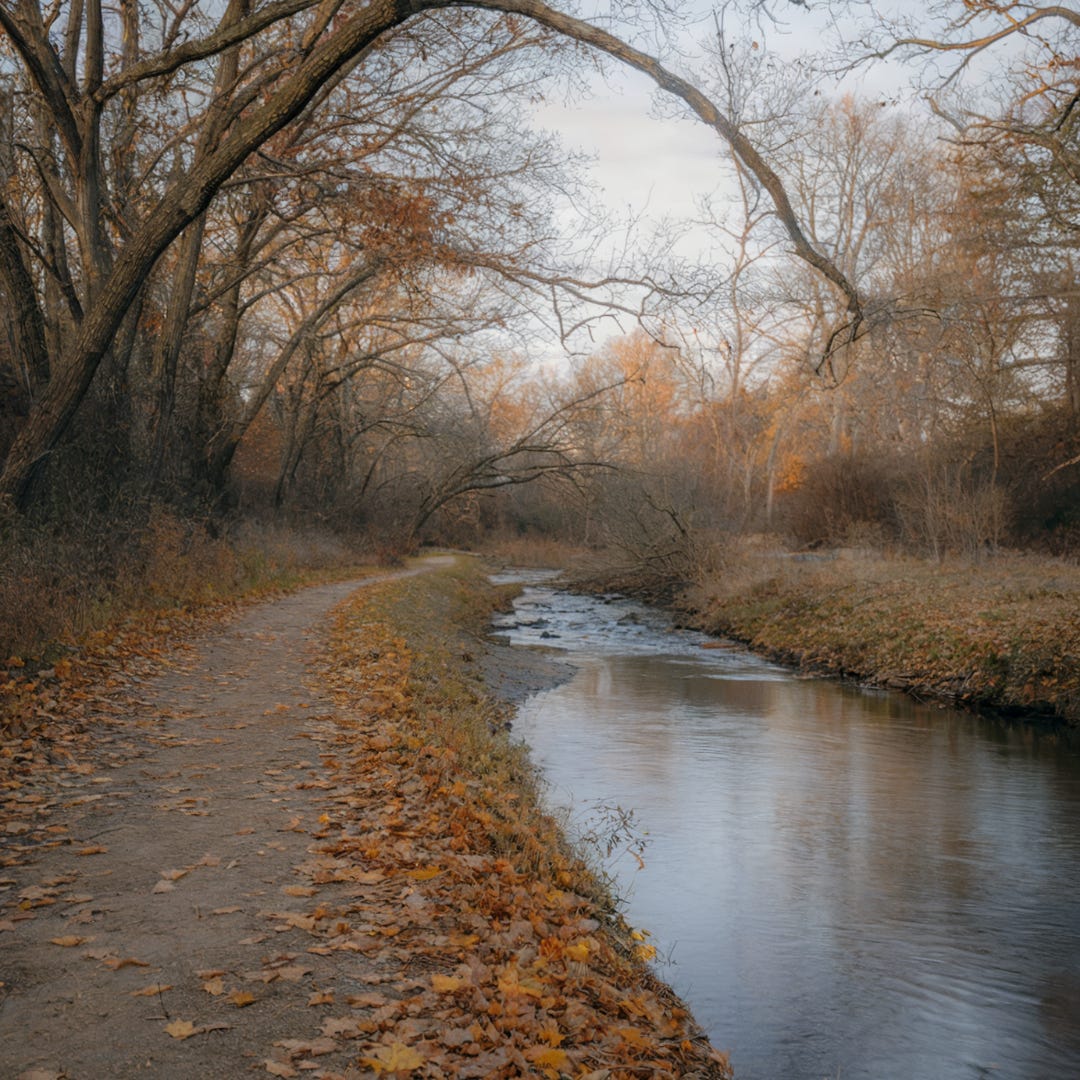
People often ask me, “What’s the difference between mindful walking and contemplative walking? Is there really a difference?”
If you’ve heard these terms but sensed there’s something deeper you’re missing, if you walk regularly but wonder whether you’re experiencing everything available, if you want spiritual practice without rigid frameworks, then this distinction matters. Understanding this shift opens an entirely different relationship with walking, along with the more-than-human world itself.
For years, I couldn’t articulate the difference clearly and often wasn't sure there was one.
It is important to remember that nobody owns the definition of mindfulness. While the term mindful has become a buzzword, this does not mean everybody necessarily means the same thing when they use it.
Both involve walking slowly. Both emphasize presence. Both invite slowing down. The distinction felt important but remained fuzzy—like trying to explain the difference between blue and indigo to someone who’s only ever seen them mixed together.
Then, during my third Camino walk on the Le Puy route, I finally understood.
The Distinction Most People Overlook
Mindful walking directs your attention inward.
Contemplative walking opens your attention outward. That’s it. One sentence. But that shift changes the approach, and also the benefits.
When you practice mindful walking, you focus on YOUR experience: the sensation of your feet touching ground, the rhythm of your breath, the thoughts moving through your mind.
You’re monitoring internal states, noticing what’s happening inside you. The goal is present-moment awareness of your own embodied experience. It’s valuable. It reduces stress. It brings you into the now.
But contemplative walking does something entirely differently.
Instead of focusing on your internal experience, you extend attention toward relationship. You’re not monitoring your breath—you’re noticing how the wind moves through branches. You’re not tracking thoughts—you’re listening to what the creek is teaching. You’re not cultivating internal awareness—you’re opening to kinship with the more-than-human world.
These aspects deepen our understanding, our engagement, and our connection to the natural world. Reflection happens through deep kinship with the living world.
Why Language Actually Matters
I used to think the difference was semantic, just different words for the same practice.
I was wrong. Words shape attention. The language we use literally directs where consciousness flows.
When you frame a walk as “mindfulness practice,” your attention naturally moves inward.
When you frame the same walk as “contemplative practice,” attention naturally extends outward toward relationship and reflection on our interconnectedness. This isn’t philosophical. It’s neurological. Where you direct attention shapes what you perceive, which shapes what becomes possible.
Mindfulness asks: “What am I experiencing right now?”
Contemplation asks: “What are these more-than-human others, or this place, teaching me?” Both questions are valuable. But they lead to fundamentally different experiences.
One cultivates internal awareness. The other cultivates kinship.
Different Purposes, Not Better or Worse
Here’s what I need you to understand: I’m not saying contemplative walking is “better” than mindful walking.
They serve different purposes. Mindfulness excels at stress reduction, anxiety management, and present-moment grounding. If you’re overwhelmed by racing thoughts or need to calm your nervous system, mindful walking is natural medicine.
It brings you back to your body, helps you notice what’s happening internally, creates space between stimulus and response.
Contemplative walking serves transformation through relationship. It’s not about finding calm (though calm may arrive). It’s about discovering kinship with the more-than-human world, learning that trees, birds, rivers, and soil are teachers, not scenery.
This practice doesn’t reduce anxiety as much as it expands identity beyond the boundaries of self.
Think of it like comparing medicine to food. Both nourish. Both essential. But you take medicine to treat symptoms while you eat food to sustain life.
Different purposes, both valuable, not interchangeable.
The Practical Shift Anyone Can Try
So how do you actually practice contemplative walking?
Start with a simple question shift. The next time you walk anywhere, such as your neighborhood or a trail, instead of asking “What am I experiencing?” ask “What is this place inviting me to notice?” That’s it. That’s the entire practice.
Instead of monitoring your breath, listen to the rhythm of your footsteps on pavement.
Instead of scanning your body for tension, notice how light moves through leaves. Instead of tracking thoughts, ask that oak tree what it knows about patience. I know how that sounds. But try it anyway.
You’re not performing magical thinking.
You’re extending attention beyond the boundaries of self, opening to relationship with the world that’s been teaching long before you arrived. Medieval pilgrims walked this way for a thousand years on the Camino route I lead. They understood something we’re relearning: walking isn’t just about YOU. It’s about discovering kinship with everything else and then deepening into how that can shift our lives.
Accessible Anywhere, Starting Today
You don’t need the Camino for this.
You don’t need a forest, retreat, or perfect conditions. You need fifteen minutes and a willingness to shift attention from internal monitoring to external listening. That’s it.
Contemplative walking works on city sidewalks as well as mountain paths.
The practice isn’t about the location—it’s about the quality of attention you bring. Your neighborhood park can teach as much as any pilgrimage route if you’re willing to listen.
Tomorrow morning, try this: Walk your normal route. But instead of focusing on your breathing or body sensations, ask the trees what they know about seasonal change.
Ask the birds what they’re teaching about presence.
Ask the sky what it knows about holding space. See what shifts. You might be surprised by what responds.
The Shift That Changes Us
Contemplative walking isn’t about perfecting mindfulness or achieving some elevated state.
It’s about relationship. Kinship. Discovering that the more-than-human world has been offering wisdom all along, waiting for you to extend attention beyond yourself long enough to notice.
On your next walk—neighborhood or trail, ten minutes or two hours—instead of turning attention inward to your breath, turn it outward to your surroundings.
Don’t monitor your experience. Listen to theirs. That simple shift from internal focus to relational awareness changes us, while providing new ways to then deepen into understanding our own experiences.
It starts with your very next step.
Walk With Me
If this resonates, I invite you to subscribe to Where Insight Meets Earth. Each week I share reflections on contemplative walking, ecospirituality, and deepening kinship with the more-than-human world—for seekers moving from digital overwhelm to grounded presence.
Hit reply anytime. I read and respond to every message. Your questions, experiences, and insights shape what I write next.
Until next time, try that question shift on your next walk: “What is this place inviting me to notice?”
See what responds.
Walking beside you,
Jeffrey