

I woke at 2 am already knowing.
This was the darkest week of the year. Six days before the Winter Solstice. My body had decided, apparently, that I hadn’t been paying attention to what the season was asking.
The next three hours were spent in that space between sickness and stillness. Knowing what was happening. Knowing what was coming. Being completely unable to do anything about it. I sat and stared. At the table. At the floor. At whatever happened to be in front of me.
I couldn’t move. I couldn’t think. I couldn’t even check email.
Food poisoning happened to me twice before in my life, and it followed the same pattern. Not just the sickness itself, but the complete shutdown of anything mental. My body refused everything of the mind. No planning. No problem solving. No running through tomorrow’s tasks.
Just sitting. Repeatedly sick and weak. Simply being and existing in a body that had seized control.
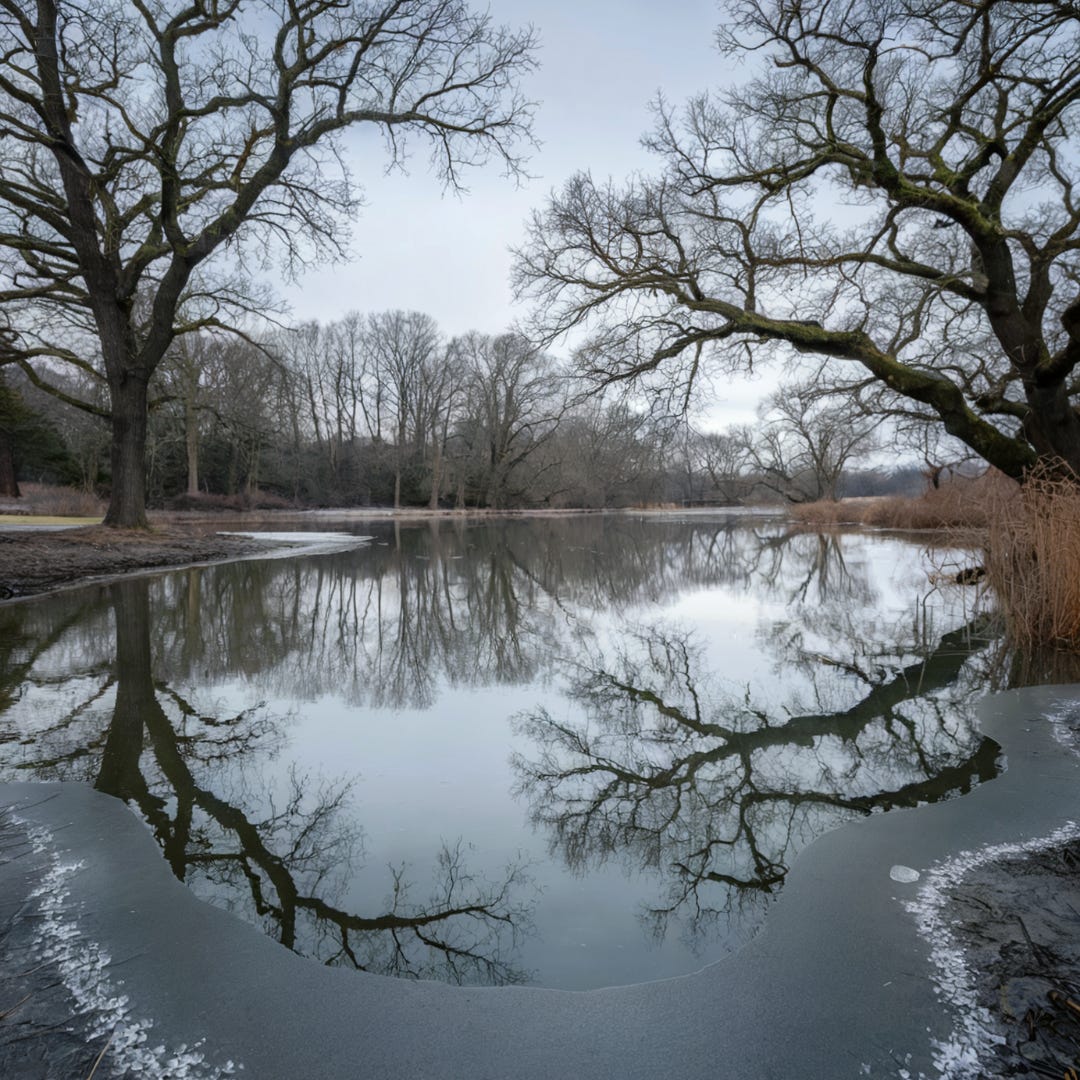
The trees outside my window had done this weeks ago. Released their leaves. Stopped producing. Pulled their energy inward and down. I was still trying to operate at summer’s pace while deep down I knew this was the wrong approach.
My body disagreed.
What Wasn’t There
I was surprised there was no resistance.
I wasn’t frustrated about being stopped. I wasn’t running mental lists of everything I should have been doing. I wasn’t feeling guilty about rest.
I was too sick to feel any of that.
All I could manage, several hours later, when I had to get up again to attend to nature’s call, was mustering enough strength to send a few cancellation emails. Meetings I couldn’t participate in. Work I couldn’t do. Commitments I couldn’t keep. The emails were brief, functional, stripped of explanation beyond the essential: I’m sick. I can’t come.
Then back to sitting. Back to staring if sleep would not come. Back to stillness.
Winter doesn’t apologize for slowing everything down. It doesn’t explain itself or offer alternatives. It simply arrives, and the world adjusts.
My body had become winter.
The Unexpected Peace
What I didn’t expect was the calm.
Though I was sick and in pain, something settled when there was genuinely nothing I could do. No “productive” option available. No way to push through, optimize, or make the most of the situation.
The machinery of doing simply stopped.
I’ve written recently about those of us who wake already carrying what we know about the world. About nervous systems that stay activated, about the weight of ecological awareness, about the myths that keep us pushing when we should rest.

My body apparently decided to make the point more directly.
In the stillness, with nothing to do but exist, I understood something the season had been trying to teach me for weeks.
I thought I understood it, but it seems I needed a stronger lesson.
What Matters and What Doesn’t
Two things surfaced in that enforced quiet.
The first: most of what I spend my mental energy on isn’t as important as I treat it. The meetings I missed happened without me. The deadlines I worried about adjusted. The world continued turning while I sat and stared at the floor, too sick to do much else.
Trees know this. They release what’s no longer essential. They don’t cling to leaves out of obligation or habit. When the season shifts, they let go, trusting that what matters will return when conditions allow.
We tell ourselves that everything is urgent, essential, and requires our constant attention. Then our bodies take us out for two days, and we discover: actually, no. Most of it can wait. Much of it didn’t need us as much as we thought.
The second insight cut deeper.
Modern life insists that intellectual work brings value. That our worth lives in our productivity, our output, our capacity to think, plan, and execute. We’ve built entire identities around what our minds can produce.
But the body doesn’t care about any of that. Neither does winter.
When my physical self said no, there was no negotiating. No thinking my way through it. No willpower sufficient to override what was happening. The body took precedence, as it always eventually does, regardless of what the mind believes about its own importance.
The Earth Does This Too
This is how the Earth works, too.
We continue polluting, extracting, building, producing, acting as though our human systems operate independently of natural rhythms. Then a severe snowstorm shuts down a city. A hurricane stops commerce for weeks. A wildfire makes the air unbreathable.
Suddenly, all our actions cease. We’re forced to attend to the physical world we’d been ignoring.
But it’s not only the dramatic events. The Earth also slows us through seasons. Through the shortening light that makes us tired earlier. Through the cold that asks us to stay inside. Through the deep winter that every culture, until very recently, understood as a time for rest, for dreaming, for descent.
The body is like the Earth in this way. It speaks in seasons, not just emergencies. It asks before it demands. When we don’t listen to the asking, it finds other ways to make its point.
Six days before the solstice, my body stopped asking.
What the Season Already Knew
I’ve been writing about winter darkness as teacher. About what the longest nights offer those of us carrying ecological grief. About how this season invites us inward, downward, toward stillness and restoration.

Apparently, I wasn’t listening closely enough.
Everything in nature is pulling inward right now. The trees stand bare. The animals have slowed or gone to ground. The light itself retreats earlier each day, as if demonstrating what we’re meant to do.
I was still trying to produce. Still pushing. Still treating December like any other month with deadlines and deliverables.
So my body aligned with the season even when I wouldn’t. It chose the descent. It forced the stillness. It created the conditions for rest that I wasn’t creating for myself.
The body knew what the season knew.
The Invitation
If you’re reading this and recognizing yourself, if you’re someone who pushes through, who overrides the body’s signals, who treats the dark season as an obstacle to productivity rather than an invitation to rest, I’m not going to tell you to slow down.
You already know that.
What I’ll offer instead is this: your body is listening to the season even when you’re not. It registers the shortening days even as you turn on more lights. It feels the pull toward stillness even as you add more to your calendar.
You can choose the descent, or it will choose you.
The solstice arrives in a few days. The longest night. The moment when darkness reaches its fullest expression before the light begins its slow return. Cultures around the world have marked this as sacred time, not despite the darkness, but because of it.
Maybe this year, we don’t have to be forced into it.
Maybe we can choose to align with what the season is already doing. Release what’s no longer essential. Pull our energy inward. Trust that what matters will return when conditions allow.
The body knows. The Earth knows. Winter knows.
The question is whether we’ll listen before we’re too sick to do anything else.
What is your body asking of you this week? As we approach the longest night of the year, the Winter Solstice, I’d love to hear what stillness is revealing to you.
If these reflections on ecological awareness and embodied practice resonate, consider subscribing. Each week, I share what I’m learning about walking with climate grief, seasonal wisdom, and the body’s quiet knowing.
Walking beside you through the dark season,
~ Jeffrey