

Labor Day honors workers.
Yet in our culture, rest often carries guilt. We feel uneasy when we pause, as if value comes only from constant productivity.
But the Earth itself rests without guilt. Every evening the sun sets, every winter the fields lie fallow, every tide ebbs. These rhythms of pause are not failures. They are the very patterns that sustain life.
So why do we resist them?
The Dignity of Labor and the Forgetting of Rest
Labor Day began in the late 19th century as a movement to honor the dignity of workers—people whose effort and sweat built bridges, harvested fields, cared for children, taught in classrooms, and ran the machinery of society.
It was about dignity—and at its essence, dignity is fundamentally about worth.
Somewhere along the way, we began tying value only to output. A person’s worth is measured in hours billed, crops harvested, and profits generated. Even when not at work, we hear the whisper: produce something, or you’re falling behind.
This is a cultural forgetting. Because true dignity is not in productivity—it is in presence. In being alive at all.
Dignity is not limited to the human realm, and I am saying this to remind myself as much as to share it with others.
Labor Beyond Humans
It’s right to honor the teacher in the classroom, the nurse in the hospital, the farmworker in the fields. But labor is not uniquely human.
Soil microbes labor in unseen darkness, transforming decay into nutrients. Rivers labor as they carve valleys and carry sediment. Pollinators labor, flitting from flower to flower, ensuring fruitfulness. Forests labor in carbon cycles, renewing air with every breath of leaf.
Here’s the deeper truth: they do this not for us but for their own survival. Their labor sustains their own lives—and in doing so, sustains ours too.
We are part of this united cycle of life. Not masters. Not bystanders. Participants.
Value in this cycle does not come from productivity but from belonging. The tree’s worth is not in its timber. The river’s worth is not in hydroelectric kilowatts. Their value is in being alive.
Just like us.
Nightfall and the Earth’s Rest
Each night, darkness comes.
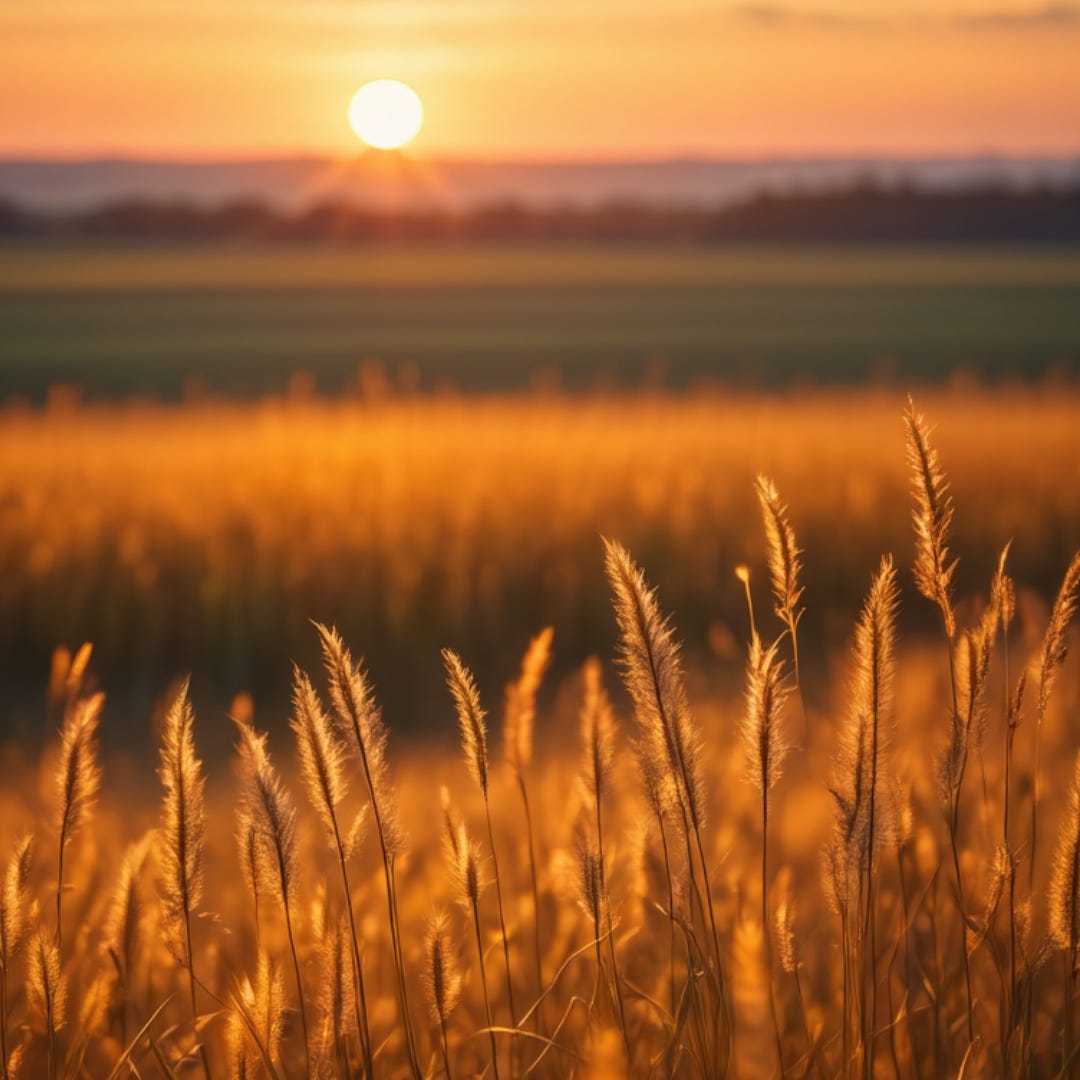
The sun slips, shadows lengthen, and the Earth exhales. Plants pause photosynthesis. Many animals find burrows, nests, or safe, quiet spaces. Even rivers quiet under the cool air.
This daily rhythm is the most basic form of Sabbath, one that the Earth keeps faithfully, whether we notice it or not.
But we resist it. We keep lights on late, fueled by caffeine, lit by screens, busy long after our bodies call for sleep. We call this discipline. Efficiency. Success. But in truth, it is denial—denial of our place within the Earth’s rhythm.
The Earth rests without guilt. Why can’t we?
Recently, I watched my dog during a season of illness—his body clearly uncomfortable, his movements slower than before. I tried the usual medications and comforts, but nothing seemed to help. Still, there was a softness in his eyes, a quiet wag of his tail when I entered the room, a slow stretch as if to greet the moment rather than retreat from it. He didn’t pretend the pain wasn’t there—he simply didn’t let it define him. There was a grace in his presence that I rarely offer myself: the ability to suffer and still stay open, to respond with love, to rest without guilt.
Nature models this grace every night. The world does not apologize for pausing. Nightfall is not failure. It is fidelity to a rhythm that keeps life alive.
Reclaiming Rest as Justice
This is where Labor Day’s lesson stretches beyond humans.
Workers have long fought for dignity in rest: the eight-hour workday, the weekend, the holiday. To rest was to resist exploitation. To claim a life beyond the factory whistle and the grind.
But the Earth also requires rest. Fields need recovery. Rivers need protection. Forests need time to regenerate. Without these pauses, ecosystems collapse.
The human body, too, collapses under constant extraction. Burnout and ecological devastation are parallel symptoms of the same lie: that value = productivity.
To reclaim rest as justice is to affirm that all life has worth beyond output. The exhausted worker. The exhausted soil. Both are valuable not because of what they produce, but because they are alive.
Rest is not indulgence. Rest is reverence. Rest is resistance.
Walking as a Practice of Rhythm
Walking taught me this more deeply than any classroom.
On the Camino, I noticed the way each day had its own arc. Morning light began in quiet steps. Midday heat demanded slower rhythms and shade. Evening called for rest, a meal, and stillness.
At first, I resisted. I wanted more miles, faster pace, more “results.” But the body and the path eventually taught me: walking only becomes sustainable when aligned with rhythm. Push against it and you break down. Align with it and you endure.
The same principle applies to daily life. Work cannot be endless. Neither can walking, farming, caregiving, or even breathing. Inhale, exhale. Season, season. Day, night. Rhythm is life.
To honor rhythm—in ourselves, in ecosystems, in cultures—is to step into justice.
Small Practices for a Different Week
If our culture trains us to resist rest, we can retrain ourselves by practice. A few simple patterns to try this Labor Day week:
Sundown Signal: When the sun sets, choose one light to turn off and one screen to put away. Let your body feel the shift from day to night.
Five-Breath Pause: Before starting a task, take five slow, deep breaths. Let yourself arrive.
Gratitude For “Invisible Labor”: Name one non-human laborer you benefitted from today—soil, river, bee, wind—and speak a blessing of gratitude aloud.
Boundary As Blessing: Choose one boundary that protects rest (no emails after a time, a short walk at lunch, a quiet morning ritual). Keep it as a promise to yourself and to the Earth.
Weekly Stillness: Pick one hour this week to do nothing useful. Watch the light move across a wall. Sit with a tree. Let the world be enough.
These are not productivity hacks. They are acts of belonging. They are all so easy to say, though only you know if they are easy to do. You will not know until you try.
A Brief Reflective Challenge
As we enter Labor Day week, ask yourself:
Where do you feel guilt about resting?
What small way could you honor rest—in your body, in your home, in the Earth around you—as sacred this season?
Rest as Resistance, Rest as Kinship
Labor Day began as a fight for dignity. That fight is not over. But the field of dignity is wider than we thought. It includes not only workers but rivers, forests, fields, and our own weary bodies.
When we rest, we honor inherent value. When we allow the Earth to rest, we honor kinship.
This week, may we walk in step with the rhythms that sustain life. May we learn from the Earth that guilt has no place in rest.
Rest is not laziness.
Rest is belonging.
Rest is justice.
🌿 Thank you for reading Where Insight Meets Earth. If this spoke to you, I’d love for you to share it with someone who needs the reminder that their worth is not in their productivity.
If you’d like to keep walking with me, subscribe to receive future reflections on pilgrimage, eco-spirituality, and kinship with the more-than-human world.