

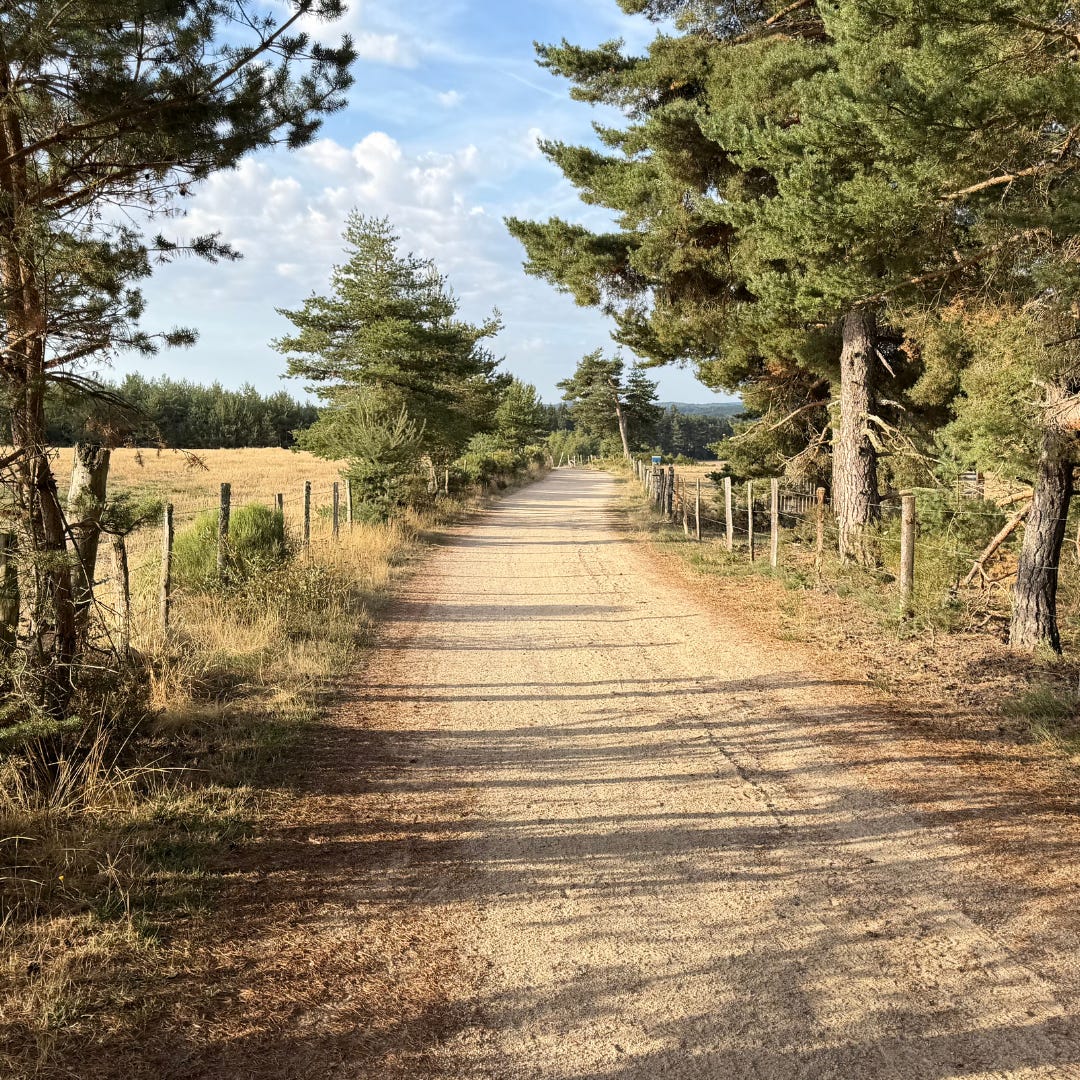
If you love the living world and still feel like a visitor in it, this is a year is built for you.
This autumn, the founding cohort of the Rewilding the Soul EcoSpirituality Certificate is learning to read the land.
We began in March with a sit spot, 10 minutes a day in the same place, and a single nature ally each person returned to through the seasons. Since then we have worked with grief and with the body, and this autumn with ceremony and with practices for listening to the more-than-human world. Among them is my adaptation of a method for reading scripture that the Carthusian monk Guigo II described in the twelfth century, which I wrote about in How to Read the Land the Way You Read a Sacred Text.
The second cohort begins on March 10, 2027, and this post gathers what you need to decide whether it is for you.
What Is Rewilding the Soul?
Rewilding the Soul is a certificate program in ecospirituality, offered online through Cherry Hill Seminary. The cohort stays together for a full year, from March 2027 to February 2028, moving through 4 seasonal modules of live classes, small group Councils, reading, and practice in your own surroundings.
The classroom is where we gather. Most of the learning happens in your own place, with the trees along your street, the birds outside your window, and the seasonal changes you learn to notice by returning to the same spot.
What I Mean by Ecospirituality
In this program, ecospirituality means spiritual practice grounded in direct, reciprocal relationship with a specific place and the more-than-human beings who live there.
Through daily practice, deep listening, study, and ongoing relationship with nature allies, you come to know the plants, animals, waters, landforms, and seasonal cycles of your own bioregion. Over a year, they become kin. Ritual and ceremony grow out of those relationships rather than being taken from a fixed system.
The program is Earth-centered rather than tied to any single religious tradition. It welcomes practitioners of every spiritual background and religion, people without a clear tradition, and people shaping their own paths. You can bring your existing commitments and find out how relationship with the living world might deepen them.
How the Year Unfolds
The program follows the Celtic Wheel of the Year in the Northern Hemisphere, with a module for each season. If you live in the Southern Hemisphere, you are welcome to join, and your seasons will run opposite to the modules.
Sacred Belonging to Place. Daily sit spot practice, study of your bioregion, land acknowledgment, and a first relationship with a nature ally.
Embodying Earth Soul. Work with personal and ecological grief, nature as mirror, and personal healing ritual.
Deepening Kinship with the Living World. Communication with the more-than-human world, ceremony you create and lead for others, and environmental justice as a spiritual calling.
Sharing Earth Gifts. Teaching Earth connection, supporting others through ecological grief, and community Earth service.
The arc moves from belonging to your own place toward sharing what you have learned with others. Each season builds on the one before it, which is why the cohort stays together for the whole year.
When and How We Meet
Dates. Wednesday, March 10, 2027, through Wednesday, February 23, 2028
Time. Wednesdays, 12:00 p.m. U.S. Eastern, which is 9:00 a.m. Pacific
Length. 90 minutes
Format. Online via Zoom, with practice in your own place between meetings
Rhythm. 24 live classes, 6 in each module, and 20 small group Council meetings on the alternate weeks
This is an experiential program, and it asks for live participation. Recordings help when you miss a session, though the work depends on being present with the cohort.
If you live outside the United States, check your local time against U.S. Eastern time, especially in the weeks when daylight saving changes on different dates.
What Happens in Council
Councils are small groups within the cohort that meet in the weeks between classes. They are where you bring what is happening in your practice, listen to others, and work through the experiences that come up between sessions.
A practice sustained across a year changes. Council gives you companions for that, and a way to learn from experiences beyond your own.
What We Read and Study
Reading accompanies the practice and gives it a wider frame. The program draws on 5 bodies of thought.
Deep ecology, which holds that the living world has value apart from its usefulness to people
Ecopsychology, which examines the relationship between people and the natural world
The phenomenology of perception, especially its account of how our senses participate with the more-than-human world
Indigenous and traditional ecological knowledge, approached with attribution and respect
Systems thinking, which attends to the relationships and patterns within living systems
Each module centers on 1 book.
Braiding Sweetgrass: Indigenous Wisdom, Scientific Knowledge and the Teachings of Plants by Robin Wall Kimmerer
The Wild Edge of Sorrow: Rituals of Renewal and the Sacred Work of Grief by Francis Weller
The Spell of the Sensuous: Perception and Language in a More-Than-Human World by David Abram
Active Hope: How to Face the Mess We’re in with Unexpected Resilience and Creative Power by Joanna Macy and Chris Johnstone
What the Program Does Not Do
Knowing a program's edges helps you see whether it fits. Rewilding the Soul does not do the following.
Teach ceremonial magic, deity work, or a formal ritual system. You design ritual and ceremony from your relationship with place, and practitioners of established traditions are welcome and may find their practice deepened.
Teach or reproduce Indigenous ceremonies. You learn from Indigenous knowledge with attribution and develop practices rooted in your own place.
Take place mainly in a classroom. Most of the learning happens in direct contact with your place, adapted to your body and your access.
Provide therapy or professional chaplaincy training. The eco-grief support practiced in the program is peer support.
Offer quick techniques. What it develops comes through sustained practice across the full year.
Who Might Find a Home Here
You may find a home here if you are drawn toward Earth-based spiritual practice and want support beginning it, if you want your spiritual life to involve your body and your daily surroundings, or if you carry ecological grief and want company in learning to respond to it. It may also suit people hoping to share Earth connection through their work, including spiritual directors, clergy, chaplains, educators, environmental professionals, and activists.
You can begin without knowing the names of the plants around you or having a settled spiritual practice. The year builds on curiosity and a willingness to keep returning to the same place.
What a Year Asks of You
Plan on a few hours a week. On meeting weeks that includes the 90 minutes of class or Council, along with reading, reflection, and daily practice.
The daily practice is short. A sit spot asks for 10 minutes in the same place and 5 minutes of journaling, and it fits into time you already have. A lunch break outside, a window at the start of the day, a bench in a nearby park. This is the part people tend to underestimate, because its depth comes from returning every day rather than from any single visit.
Some parts of the year ask for more. Preparing a ceremony for the cohort and carrying out a community service project both take time beyond the weekly rhythm, so leave room for them.
Tuition and Enrollment
Tuition is $1,800 for the full program, paid in 4 installments of $450 at the beginning of each module. The cohort runs with a minimum of 6 participants and a maximum of 12.
You can read more and apply through the Cherry Hill Seminary program page, or go directly to the application. The certificate FAQ covers format, schedule, cost, and books, and links to a brief syllabus for 2027 to 2028.
About Me
I am Jeffrey Keefer, an ecospirituality educator and ordained Wild Guide. I serve as Chaplain and Spiritual Life Advisor at New York University and as Professor of Research Methodology, and I am a certified spiritual director with a doctorate in educational research from Lancaster University.
I have walked 7 Caminos, along the Le Puy route in France and the Camino Francés in Spain. Much of what I teach emerged from those pilgrimages, from walking as spiritual discipline, from letting the land shape me, and from discovering that I was never separate from the living world around me.
If you are wondering whether the program fits your interests, schedule, or circumstances, write to me here on Substack or via email.
A Place to Begin
A year of returning to the same place changes what you notice there, and over time, how you belong to it. You can get a sense of that before March.
A First Sit Spot
How long. 10 minutes, on 2 days in a row, in the same place.
Where. 1 place you can reach easily. A sidewalk bench, a courtyard, a park, or a window will do.
What to attend to. 1 thing there, such as the light, a single tree, or the sounds that come and go.
What you may notice. The place may feel different on the second visit than it did on the first.
Where would your sit spot be, if you began this week?
Contemplative Walking is a reader-supported publication. To receive new posts and support my work, consider becoming a free or paid subscriber.