

If this post impacts you, please leave a like or comment.
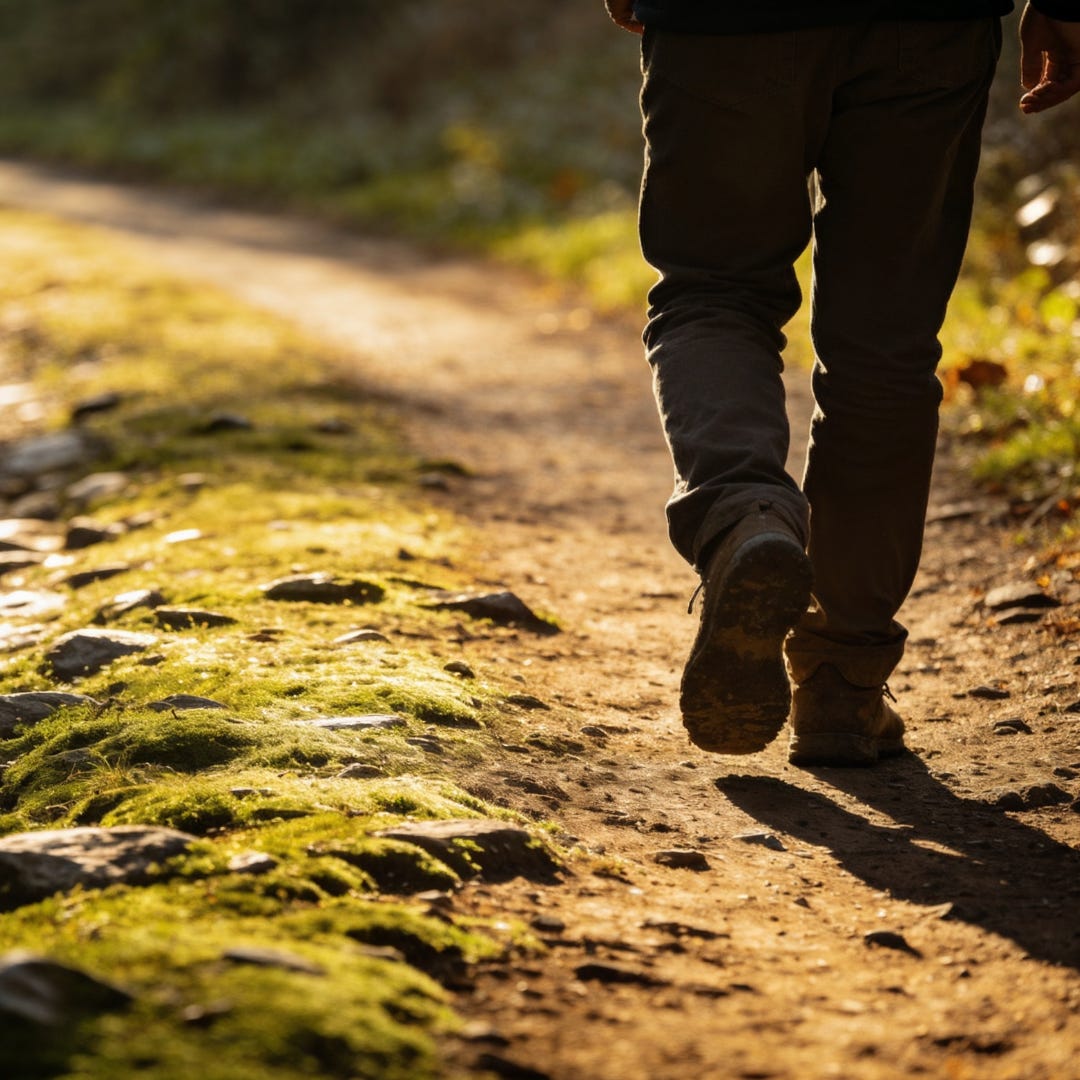
You have walked the Camino.
Maybe once, maybe several times. You have the blisters, the stories, the credentials, the photographs of the route across France, Portugal, or Spain. You have done the thing that people who have not done it assume must be transformative.
Something is still missing.
If that sentence lands, this post is written for you. It is for pilgrims who have walked the Camino and know, somewhere in the body, that the pilgrimage opened something the ordinary weeks back home are not holding. What follows is the practice that extends what the Camino gave you into the rest of your life.
Perhaps this post is for you.
What Earth Day Cannot Do, and What the Camino Cannot Do Alone
Earth Day passed yesterday. Many of us marked it. Many of us felt the familiar cycle of awareness, concern, and return to the normal current of the week. Yesterday was “Go, Earth!” and today is the status quo of human concerns on Thursday.
If you have walked the Camino, you already know that a single day of attention cannot substitute for a sustained relationship with the living world. You have walked far enough, quietly enough, and long enough to know what the difference feels like in your body.
Here is the harder truth, one I had to learn across multiple walks: even the Camino does not automatically produce kinship with the Earth. Walking through a landscape is not the same as being in relationship with it.
My first Camino did not shift anything at a deep level. I was carrying too much in my head. I was trying to make sense of my life, process things, arrive somewhere internally, and have a magical Camino experience focused solely on my internal changes. The landscape was there the whole time, offering what it has always offered. I was too full of my own noise to receive it.
My second walk was different, not because the landscape had changed, but because I had become quieter enough to notice it.
Why Walking Alone Is Not Enough
Nature is often the backdrop to our lives, even as we move through it.
You can walk hundreds of miles on a pilgrimage and still be mostly inside your own mind. You can pass through woodland, cross rivers, climb into villages at dusk, and register almost none of it as presence. The landscape remains scenery. The living world remains out there, somewhere beyond the thinking.
What kinship requires is not more walking. It is internal slowing. It is the willingness to step out of the human-only noise of phones, commentary, planning, interpretation, and problem-solving long enough for the living world to speak.
Robin Wall Kimmerer, in her book Braiding Sweetgrass, writes that attention is the first act of love. She is not describing effort. She is describing the kind of stillness that lets something other than ourselves register.
The Camino gave me that stillness because it removed almost everything else. No meetings. No social media. No decisions beyond where to break for rest, eating, and sleeping. Just walking, weather, landscape, and the internal quiet that eventually arrived because there was nothing else competing for the space.
That is what pilgrimage walking does when it works. It silences everything that is not the walk itself, and in that silence, the living world becomes something you can enter into a relationship with rather than something you are moving through.
The Practice That Extends the Camino Into Ordinary Life
You do not need to return to Spain, Portugal, or France to practice what the Camino taught you. You need a version of the same silencing, on a smaller scale, closer to home, and returned to regularly.
This is what I now call a nature wander.
A wander is not a hike. A hike has a destination, a distance to cover, a summit to reach, or a pace to maintain. A wander has none of those. It is a spiritual practice of walking without arriving anywhere, where the walking itself is the silencing, and the slowing is the point. You are not covering ground. You are letting the ground cover you. Any effort to get somewhere pulls the mind back into the human noise the wander is meant to release.
You choose a familiar place, such as a park, a section of woodland, a stretch of river path, or a route you already know. You leave your phone in your pocket. You walk slowly enough that the living world can arrive. You follow what draws you rather than a plan. See what invites your curiosity, and spend some time with it.
Don’t get lost in trying to understand why this being or that one; instead, when you feel something attracting you, just spend the time with it. Let what happens, happen.
Then you return. Next week, or the week after, you walk the same route again. Not because repetition is disciplined, but because the relationship with the living world reveals itself across visits, not within a single one.
For experienced Camino walkers, this is the practice that extends what the pilgrimage began. A Camino happens once or twice a year at most (and often, even less than that). A weekly wander, repeated across seasons, happens fifty-two times. It is the Camino in miniature, available without flights or time off, producing what an annual pilgrimage cannot: a sustained, specific, ordinary relationship with one piece of the living world.

An Invitation to Those Who Have Already Walked
If you have walked the Camino and something in you is still hungry, this may be what you have been hungry for.
Not another pilgrimage. Not a longer route. Not a more challenging stage. A practice that extends what the Camino gave you into the ordinary weeks between walks, across the months and years when these ancient European paths are unreachable.
The same silencing, the same openness, the same willingness to let the living world speak. Applied to a park near your home, a familiar trail, a tree you pass on the way to work.
Earth Day was yesterday. The Camino is every day, if you let it be.
Begin this week. Choose a route you already know. Walk it slowly, without a destination, with enough internal quiet to let the living world register as more than backdrop. Return next week and notice what the second walk holds that the first one could not.
The Camino taught you how to walk this way. The practice is portable. Carry it home.
Please share below if you have walked the Camino and felt this same hunger for what comes next. I am reading everything.
This practice is the foundation of the Rewilding the Soul EcoSpirituality Certificate at Cherry Hill Seminary where I teach, and is also woven into every day of the September 2026 Contemplative Walking Retreat on the Le Puy Camino I am leading along seven days of returning to the same living landscape until it becomes something more than scenery. No retreat required to begin. Start outside today.
I am so in, Jeffrey. Can't wait for September. But as you note, I can also start (or resume) this practice now.