

I talk about rest for a living, and I am terrible at taking it.
I teach contemplative practice. I guide people toward slowness, silence, and restoration, and I write this newsletter about walking as a way of returning to ourselves and to the living world. Meanwhile, I work nearly every day. I am a consultant, which means many clients and no natural end to the workweek, and most of the people I serve do work I believe in: nonprofits, academic institutions, spiritual communities, and people seeking a deeper relationship with the natural world. That makes stopping harder, not easier. The work matters, the people matter, and the needs do not pause because Saturday has arrived. I tell myself I will rest over the weekend, then I work through it, and too often I rest only when the energy runs out, which is a collapse rather than rest.
I am writing this partly as advice, and mostly as a reminder to myself.
Willpower Loses to the Inbox
Years of failed weekends taught me something about my own character: I cannot trust a daily decision to rest.
When rest has to compete with the inbox every morning, the inbox usually wins. It does not need to win every time. It only needs to win often enough. So I stopped relying on the decision. Once a year, booked far in advance, paid for, planned around, and non-negotiable, I walk alone for a week through rural France, on the Le Puy route of the Camino de Santiago. This June was the sixth year. The place matters to me, the old villages, the open fields, the cattle in wet grass, the rain and the birdsong and the long stretches of quiet. The structure may matter even more. I commit to the week too far ahead to surrender it to the urgency of any given moment, so by the time June arrives, the decision has already been made.
I do not take the week because I am good at rest. I take it because I am bad at rest, and I finally stopped pretending otherwise.
The First Two Hours Tell the Truth
The honest version of this annual walking retreat is less serene than it looks from the outside.
The first hour of walking, most mornings, is an argument with myself. Why am I doing this again, instead of the beach, or a stack of books at home? The pack is heavy, the feet ache, the path climbs, and my knowledge-worker mind runs on at full speed, planning, organizing, revisiting conversations, researching problems nobody asked me to solve that day. I am a researcher at heart, and a beautiful landscape does not switch that off.
So I keep walking. Somewhere in the second hour, something loosens. The mind exhausts its arguments, my attention returns to my body, then to the path beneath me, and I begin to notice the weather, the shape of the hills, the birdsong changing, the small lives moving at the edges of the trail. The world comes back into view. Only then does contemplative walking truly begin.
We imagine the right retreat will hand us peace at the door. That has never been my experience. The Camino does not hand me rest. It holds me in place long enough for rest to become possible, two difficult hours at a time, and no weekend at home has ever held me that long.
The Living World Rests, and I Am Part of It
The Land I walk through could teach a course on this.
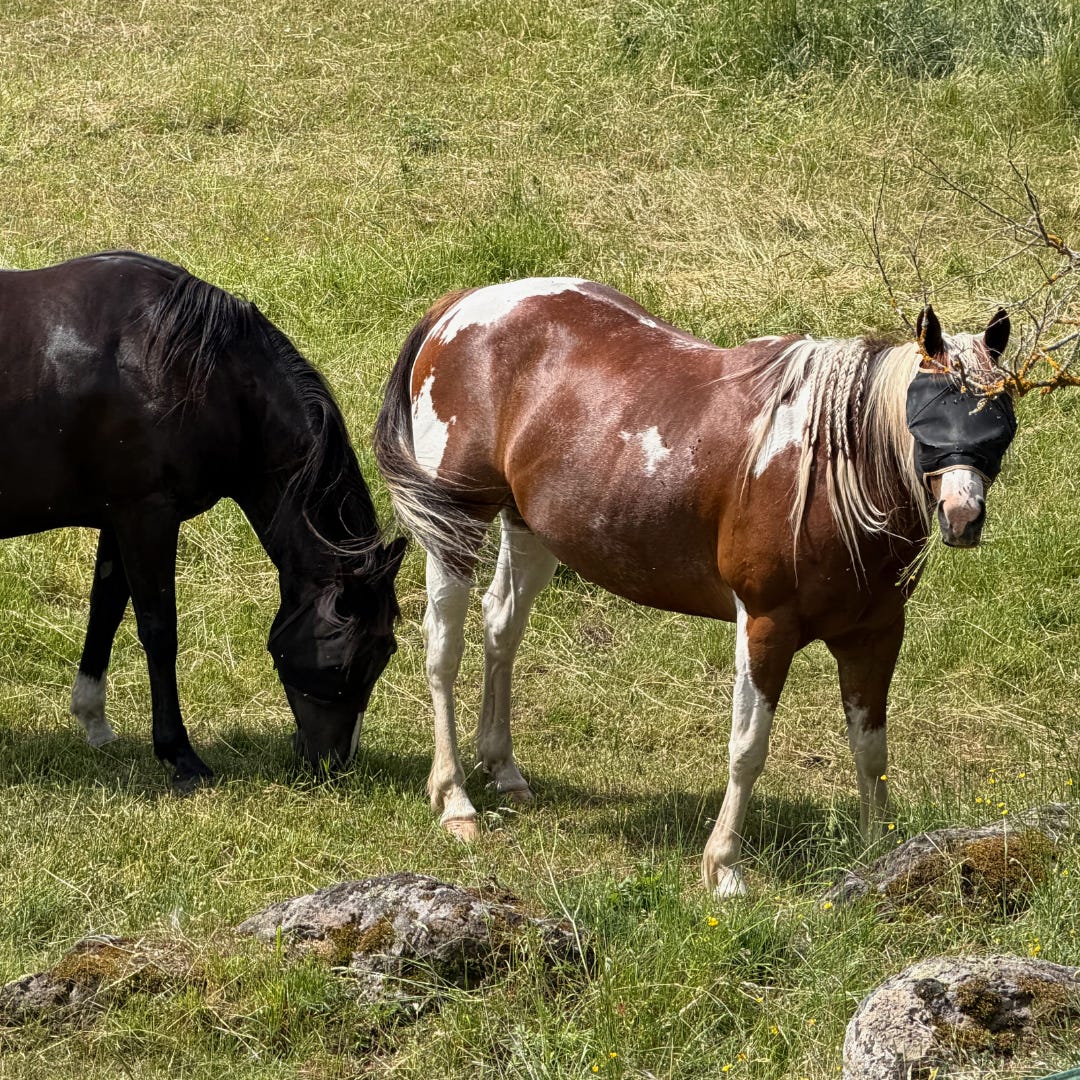
The cattle lie down in the wet grass for hours of the day. The fields along the route rest fallow in their turn, a practice farmers have kept for millennia because soil that never rests stops giving. The birds end their singing at dusk. Winter itself is the Earth’s own sabbath, half the living world asleep until the light returns. Rest is built into the order of things, woven through every being I pass on that trail, and somewhere along the way I absorbed the idea that I alone was exempt. Walking among beings who rest without guilt, I remember that I am one of them, an animal with limits, part of a world that renews itself by stopping.
The guilt says rest is stolen from the work. The fallow field says rest is how there is any harvest at all.
Who the Week Actually Belongs To
From the outside, this week looks like the most self-indulgent thing I do all year.
The rest of the year tells a different story. My teaching at both the university and the seminary draws on it. The chaplaincy work draws on it. The gatherings I lead, the walking retreat I will guide in September, and every essay here, including this one, come from the well that walk refills. The people I serve from July through May are served by someone who was restored in June, and the restoration shows in small consequential ways, in patience, attention, generosity, and the ability to stay genuinely present when someone brings me a need.

The old monastics built prayer and work into a single rhythm, ora et labora, because they understood that withdrawal and service belong to one another. What is gathered in silence can be carried back into the world. Those of us who help, teach, guide, or care for others sometimes treat continual giving as a sign of devotion. Pouring from an empty well leaves us with less to offer, and eventually with nothing, and the people we serve are the ones who receive the emptiness.
Rest Beyond the Reach of Argument
If you are anything like me, good intentions will lose.
Rest needs a structure strong enough to protect it from the person you become when the inbox is full, and everything feels urgent. Put one real period of rest into your calendar, a week, a weekend, or one guarded day each month, sized to the life you actually have. It does not need France, a pilgrimage route, or a heavy pack. It needs to be planned ahead, protected, and difficult to bargain away, so that when the time arrives, the decision has already been made.
My own practice remains imperfect. I still give advice about rest that I fail to follow most weeks. Once a year, through structure rather than strength of character, I step away, walk until the clamor quiets and the world comes back into view, and remember what the work is for. Much of what I give during the rest of the year begins there.
What is one period of real rest you could put on your calendar now, far enough ahead that the decision will already be made when the time arrives? Who, besides you, might be served by your taking it? I would be glad to hear in the comments.
If you find this useful, please like or leave a comment.
The Rewilding the Soul EcoSpirituality Certificate at Cherry Hill Seminary, where I teach, is currently underway with this year’s cohort. The September 2026 Contemplative Walking Retreat I am leading on this same section of the Le Puy Camino is full. New offerings, including future retreats and additional teaching opportunities, will be announced here in the months ahead. For now, the practice itself is what matters most, and it is available to you wherever you are walking this week.
Where Insight Meets Earth is a reader-supported publication. To receive new posts and support my work, consider becoming a free or paid subscriber.
Ok I love this and quite frankly it opens up possibilities and options I never deeply considered previously. Thank you for sharing. The Camino is something I have thought about completing for years and just haven’t pulled the trigger on... And not for nothing, your walking retreat in September looks amazing (I’m not shocked it’s full!).