

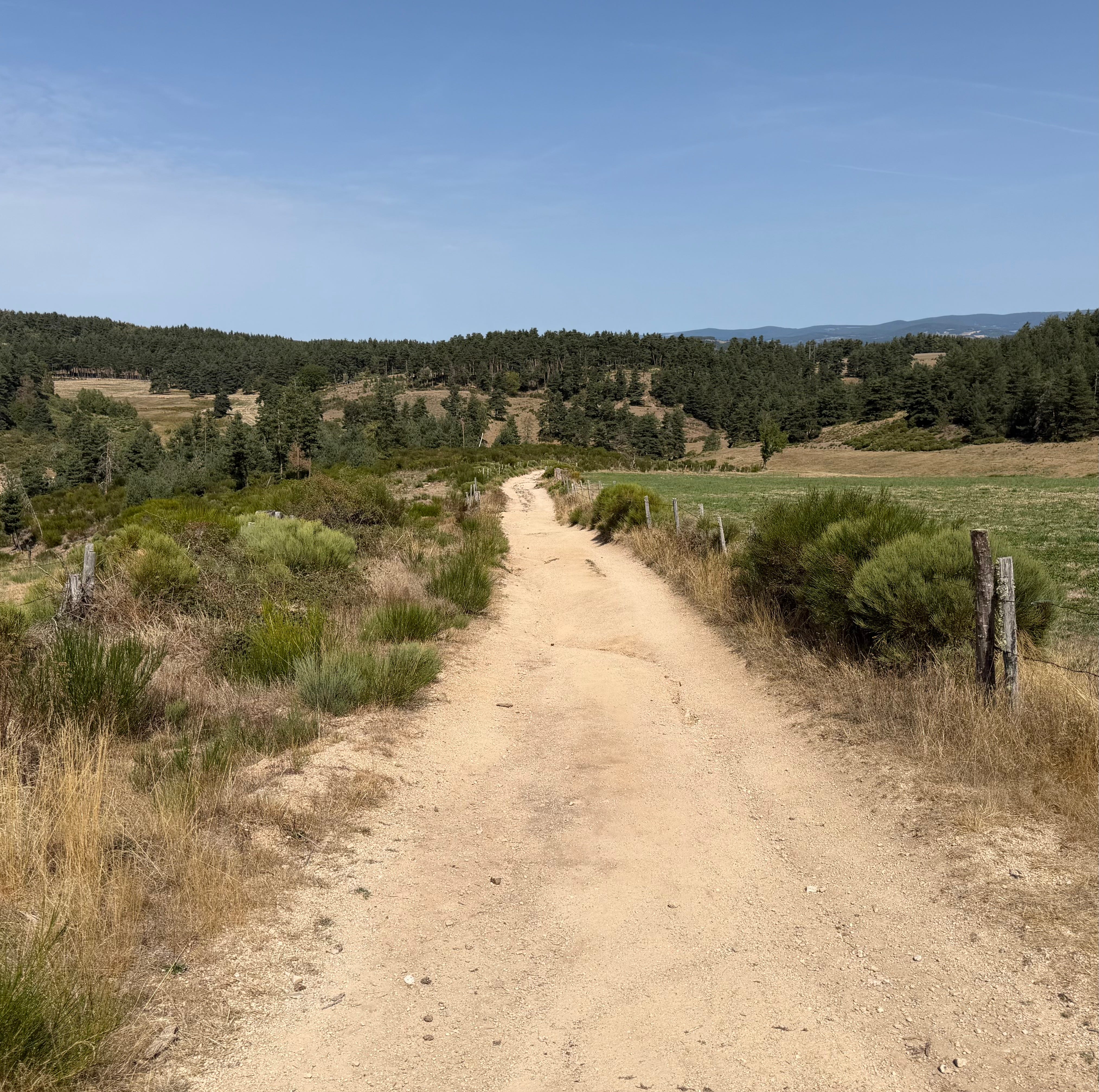
I wrote this before I left.
From September 5 through September 11, I am walking along the Camino in France from Le Puy-en-Velay to Conques with the 4 people on my Contemplative Walking Retreat, and I am fully out of touch while we are on the route.
Here is what I will be doing out there, in the form I actually use when there is a pack on my back and a long day ahead.
Where This Comes From
A twelfth century Carthusian monk named Guigo II described four movements for reading scripture slowly, one at a time, until the words worked their way into the body. His sequence has served contemplatives for 900 years.
I use it outdoors, with the living world as the text.
The sequence stays. What changes is that the text can answer back. A book holds still for you, and an oak does not. It has its own life underway, and it registers your arrival whether or not you notice that it has. I wrote the full practice out a few weeks ago in How to Read the Land the Way You Read a Sacred Text, including the three premises it rests on and a worked example from a rainy morning outside Espalion.

This post is the portable version.
The Practice in Four Words
Receive one being, ponder what they offer, respond with care, and stay long enough to belong.
Four words: Receive, Ponder, Respond, Belong. Everything below is commentary.
The Four Movements, Walking Version
Receive. Something stops you. One presence rather than the view: a beech at the field edge, a slug crossing the track, water moving under a stone bridge. Let the many recede and stay with the one.
Ponder. Stay with it and let it work on you. What is it doing? Let whatever rises in your body arrive before you go looking for what it means. Do this without judgment, as whatever attracts your attention is good.
Respond. Answer what you met. Thank it, ask it something, apologize, promise care. Ask how it is doing. Wish it long life and good energies. Aloud or silently. If you have picked something up, put it back before you go.
Belong. Stay past the point where you have decided the encounter is finished. This is the movement worth stopping for, and it is the one most of us skip because it looks like nothing is happening. The Land moves slower than thought, and often slower than people do. Give it the extra minute and something usually shifts.
Why This Works on a Long Walk
A full day of walking gives you more encounters than any of them can hold your attention.
The practice is not a schedule. Most of the miles will pass with my mind elsewhere, which is ordinary and not a failure. What matters is that when something does draw my attention, and it always does, I have 4 words to fall into rather than a decision to make about whether to stop.
The Aubrac will offer cattle, weather, and plenty of open ground. Your version this week may be a street tree, a canal path, or even a hedge behind a car park. The practice does not distinguish between them, and neither, in my experience, does whatever living being is looking back.
While I Am Gone
Comments stay open, and I will read every one and comment back when I come down off the route in mid-September.
Tell me what stopped you this week, and how long you managed to stay.
If you find this useful, please like or leave a comment.
If you try the practice I offered, I welcome hearing how it goes for you.
The Rewilding the Soul EcoSpirituality Certificate at Cherry Hill Seminary, where I teach, is currently underway with this year’s cohort. The September 2026 Contemplative Walking Retreat I am leading on this same section of the Le Puy Camino is full. New offerings, including future retreats and additional teaching opportunities, will be announced here in the months ahead. For now, the practice itself is what matters most, and it is available to you wherever you are walking this week.
Contemplative Walking is a reader-supported publication. To receive new posts and support my work, consider becoming a free or paid subscriber.
Bon Chemin
Jeffrey, I absolutely love this. First, it is the simplest and clearest explanation of lectio divina I have ever come across. And then you brilliantly “take it to the land,” opening us to encounter and relationship. This is a real gift.