

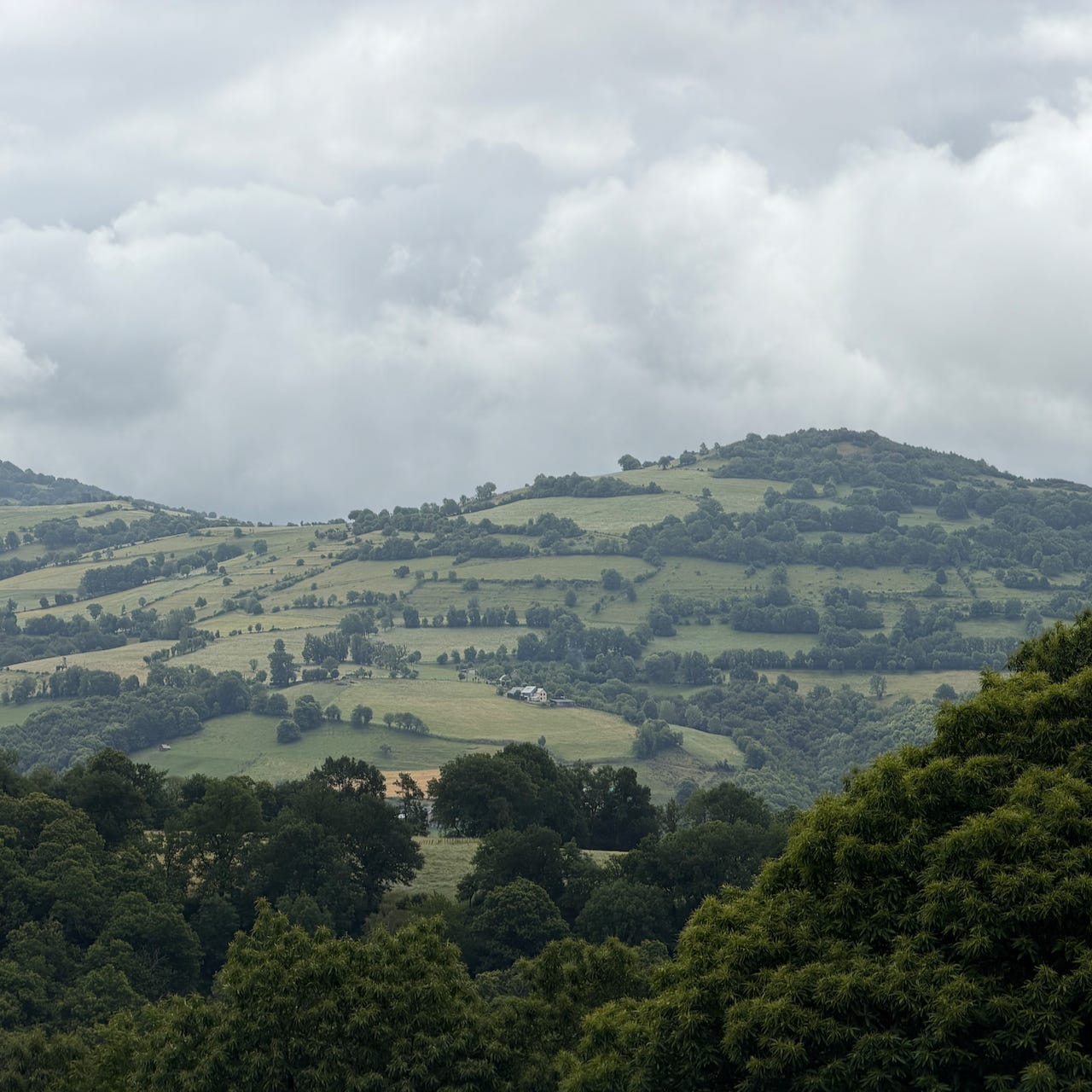
The Fall Equinox gave me a beautiful lunch hour, very close to home, and I came back better than I left, in ways that reached well beyond my time with the Land.
That kind of day makes walking easy. The next few weeks will not. The light shortens, the paths turn to mud, and people who walked faithfully all summer quietly stop until spring. Most of them never decide to. They simply notice one day that they have stopped.
As an ordained Wild Guide who has walked the Camino 7 times, in rain as well as sun, I think these are the weeks when a walking practice becomes real. What follows is why the turning season is the truest test of connection with the living world, and how to keep walking through it, 20 minutes at a time.
The Question Underneath the Practice
The walking practice I teach, Earth-Based Lectio Divina, has 4 movements for meeting one living being at a time: Receive, Ponder, Respond, and Belong. In July, I set out the 3 premises beneath it: the living world has agency, encounter is mutual, and reciprocity is required.
The second premise is where autumn does its work. Mutual encounter means two parties, each with a life of its own. That challenges a very common and very comfortable version of nature connection, in which the forest exists to restore you and the birdsong exists to reward your attention.
In that version the living world is a service, and you are the customer.
A reader recently raised a version of this question in the comments, wondering how much of what we encounter outdoors is there for us. I have been turning it over ever since. My answer is that almost none of it is, and that this is the better news.
Nobody Arranged the Autumn for You
Summer makes the service version easy to believe.
The light is generous, the air is mild, and a walk returns exactly what you went out for. For months the living world seems to be cooperating with you. Then the weather changes.
The rain falls because the season has turned. The dark comes early because this half of the earth is leaning away from the sun. The mud on the path is water and soil doing what they have always done, and you happen to be walking through it.
None of it is about you.
That is what makes autumn useful. When nothing out there is arranged for your comfort, the only reason left to walk is the relationship itself. Summer walking can run on what it gives back, and October walking has to run on something steadier.
That is the sense in which the walking season starts when everyone else stops. From here on, a walk rests solely on the relationship.
Readers south of the equator are walking into longer days right now. The same question will be waiting for you in April.
What the Good Days Can and Cannot Carry
I do not want to talk down the good days.
Last Monday’s hour did me real good. A walk that restores you is a gift, and there is nothing wrong with being glad of it. The trouble begins when restoration becomes the reason you go.
Then, in the first cold, wet week, the practice lapses because the thing you were really visiting has stopped being offered quite as freely.
Kinship is what carries a practice through that. Kin are the ones you keep visiting when the visit costs you something, and the ones who see you in every season rather than only your best one.
How to Keep Walking Into the Dark Half
Shorten rather than stop.
Twenty minutes in the rain keeps a relationship going through weeks when an hour feels impossible. Go back to the same place, too, because a tree you visit through the dark months shows you its winter, and you show it yours. Returning is what turns a walk into a relationship.
Dress to stay rather than to pass through.
The fourth movement, Belong, asks you to remain after you have decided the encounter is finished, and nobody lingers while they are cold. A warm hat does more for that movement than any amount of good intention.
Bad weather does not keep the living world from reaching you. Some of the encounters I remember best came in rain, including 2 frogs in a pond outside Espalion who stopped me mid-stride on a wet June morning.
The Practice
The Weather You Would Not Have Chosen
How long. 20 minutes is enough.
Where. A route you already know, ideally one you have walked in better weather. Choose a route and weather that are uncomfortable rather than dangerous. Rain and wind are fine. Storms, ice, and dim or unlit paths are reasons to choose another day.
What to attend to. One living being carrying on regardless of the conditions. A tree taking the wind, a bird out in the rain, moss darkening in the damp. Then the 4 movements: Receive one being, Ponder what they offer, Respond with care, and stay long enough to Belong.
What you may notice. You may find that the weather bothers you for the first 5 minutes and then stops mattering. You may find that the being you chose is entirely unbothered, which has its own lesson in it. You may find that a route you thought you knew is a different place in the rain.
Who Is Out There in the Rain
The living world was never arranged for your comfort, and the dark half of the year is when you find that out. The relationship that survives it is the one worth having.
This week, pick a day with weather you would normally stay inside for, as long as it is safe to be out, and walk 20 minutes on a route you already know.
What weather usually keeps you indoors, and who do you think is out there in it?
If you find this useful, please like or leave a comment.
If you try the practice I offered, I welcome hearing how it goes for you.
Contemplative Walking is a reader-supported publication. To receive new posts and support my work, consider becoming a free or paid subscriber.
This: "You may find that the weather bothers you for the first 5 minutes and then stops mattering. "
This is so very true. Winter walking, windy walking, out here on the western prairies there are many days in the darker season that make it easy to excuse myself from going out, but instead I persist, and yes, when dressed for the weather, after about five minutes I completely forget my hesitation to get out, and always enjoy my walk on the land.
Great essay. Thank you.